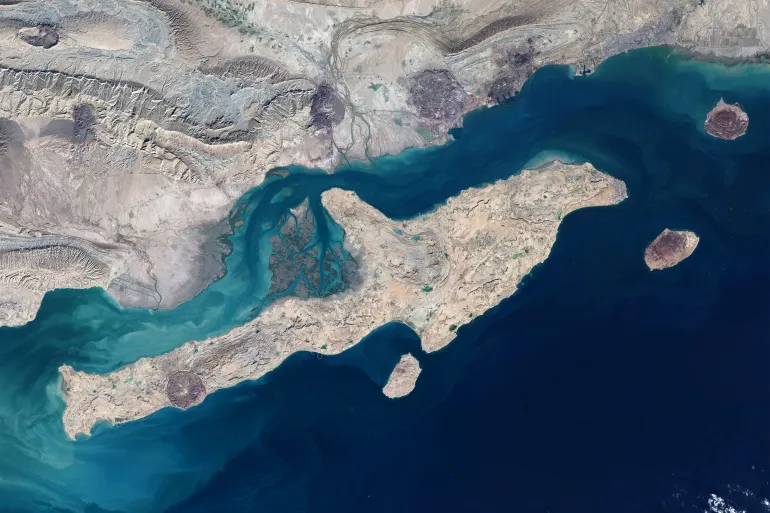
Transits through the Strait of Hormuz remain limited even as the US and Iran have reached an agreement to extend the current ceasefire.
According to Reuters, citing sources familiar with the matter, the truce will be extended for another 60 days, and Iran would allow traffic through the Strait to resume.
The agreement was said to be waiting for the approval of US President Donald Trump.
Lars Jensen, president of consultancy firm Vespucci Maritime, said there is no deal until there is one.
“The reason I am depicting it in this way is that it is far from the first time a deal has been announced as imminent over the past three months, and yet failed to actually materialize,” Jensen said.
“Additionally, should the press coverage prove to be correct, the deal would in reality not be a deal but a framework for negotiating a deal over the next 60 days,” Jensen said. “The positive indication is that it would include Iran clearing the mines over the next 30 days and open Hormuz for transit cargo.”
Jensen noted that Iran has repeatedly said that the Strait is presently open – although with the caveat that you need to coordinate with the Persian Gulf Strait Authority (PGSA) – an entity which the US has placed on the OFAC sanctions list.
According to the Strait of Hormuz tracker, a free, real-time dashboard that tracks the ongoing crisis using AI-powered analysis of current Strait conditions, insurance markets and diplomatic developments using real-time web data and AIS data for vessel positions, four vessels have transited the Strait over the past 24 hours.
BACKGROUND
Transits through the Strait have been essentially halted since late February when the US and Israel attacked Iran.
The closure has had significant impact on crude oil and chemical markets as around one-third of global seaborne crude flows and up to 20% of the world’s total oil flows pass through.
Crude oil prices fell by 1% on Friday on positive sentiment of an agreement and are tracking toward the sharpest decline since early April.
The closure has had less impact on container shipping as less than 2% of global container capacity passes through the Strait each year but has contributed to higher rates mostly because of surging bunker fuel prices.
Container ships and costs for shipping containers are relevant to the chemical industry because while most chemicals are liquids and are shipped in tankers, container ships transport polymers, such as polyethylene (PE) and polypropylene (PP), which are shipped in pellets. Titanium dioxide (TiO2) is also shipped in containers.
They also transport liquid chemicals in isotanks.
Source: By Adam Yanelli, ICIS