Washington: US President Donald Trump has not yet approved a proposed agreement with Iran following a lengthy review meeting at the White House, with administration officials stressing that any deal must meet Washington’s core conditions.
Trump reportedly spent around two hours in the White House Situation Room examining a potential framework aimed at reducing tensions and ending the ongoing conflict. No final decision emerged from the discussions.
White House Reiterates Key Condition
Following the meeting, a White House official said the president would only support an agreement that serves US interests and satisfies his stated requirements.
The official reiterated Washington’s central position that Iran must never be allowed to possess a nuclear weapon, describing it as a non-negotiable condition in any future arrangement.
Iran Says No Final Agreement Reached
Iranian officials confirmed that discussions are continuing but rejected suggestions that negotiations have reached a conclusion.
Esmaeil Baqaei said no final agreement had been reached and insisted that Tehran was not negotiating under externally imposed terms. He argued that Iran would not accept a framework dictated by ultimatums from other countries.
Disagreement Over Terms of Possible Deal
Trump previously outlined what he described as the broad elements of a potential agreement, including:
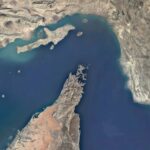
- Reopening and securing navigation through the Strait of Hormuz.
- Removal of restrictions affecting maritime traffic.
- Arrangements concerning Iran’s stockpile of enriched uranium.
However, Iranian media disputed several aspects of Trump’s description.
Sources cited by the Iranian news agency Fars News Agency reportedly characterised the US account as only partially accurate and challenged claims regarding Iran’s nuclear material and future shipping arrangements in the Strait of Hormuz.
Iran is also reportedly seeking the release of billions of dollars in frozen assets as part of any eventual settlement.
Energy Markets Watching Closely
The uncertainty surrounding negotiations continues to affect global energy markets.
The Strait of Hormuz remains one of the world’s most important oil transit routes, and any disruption to shipping there could have significant consequences for global energy supplies and prices.
Regional Tensions Persist
Despite diplomatic efforts, tensions across the region remain high.
Iran and the United States have continued to accuse each other of violating a recently announced truce, while fighting between Israel and the Iran-backed Hezbollah has shown little sign of easing.
Israeli Prime Minister Benjamin Netanyahu said Israeli forces had advanced further into Lebanon, while Hezbollah claimed responsibility for drone attacks against Israeli military positions in northern Israel.
Both sides continue to accuse one another of violating ceasefire understandings even as diplomatic efforts to reduce tensions remain ongoing.
Deal Still Appears Some Distance Away
While both Washington and Tehran acknowledge that talks are continuing, public statements from both sides suggest substantial differences remain over nuclear restrictions, sanctions relief, frozen assets and regional security arrangements.
For now, negotiators appear to be continuing discussions, with no indication that a final agreement is imminent.