Oil prices fell on Thursday as hopes of a possible agreement between the United States and Iran to prevent further escalation in the Middle East eased concerns over global energy supplies.
Crude prices have declined more than 5% during the week, slipping below the $100-per-barrel mark amid expectations that tensions around the Strait of Hormuz could ease.
Around 7:20 am, WTI Crude was trading at $90.09, up 1.59% after recovering from an earlier low of $89 per barrel. Brent Crude rose 1.89% to $96.07 after touching the $95 mark earlier in the session.
The market reaction came after Iran’s Revolutionary Guards stated that a return to war with the United States was unlikely, while maintaining that Tehran remained prepared to respond to any attack.
At the same time, US President Donald Trump signalled that Washington was not rushing into a deal with Iran despite earlier comments suggesting an agreement was close.
During a Cabinet meeting at the White House, Trump reiterated that his administration remained focused on securing what he described as a favourable ceasefire arrangement with Tehran.
“They thought they were going to outwait me, you know? We’ll outwait him; he’s got the midterms. I don’t care about the midterms,” Trump said.
“Iran cannot have nuclear weapons. I’m doing that for the world, not just for us,” he added.
Strait of Hormuz at Centre of Negotiations
Speaking about the Strait of Hormuz, Trump said the strategic waterway would remain open to all countries and described it as a key part of ongoing negotiations.
“It’s international waters. Nobody’s going to control it. We’re going to watch over it. We’ll watch over it, but nobody’s going to control it,” he said.
Trump also rejected suggestions of a temporary arrangement under which Iran and Oman would jointly control the strait, warning Oman against interfering in the negotiations.
“Oman will behave just like everybody else, or we’ll have to blow ’em up,” he said.
Three Months of Hormuz Disruption
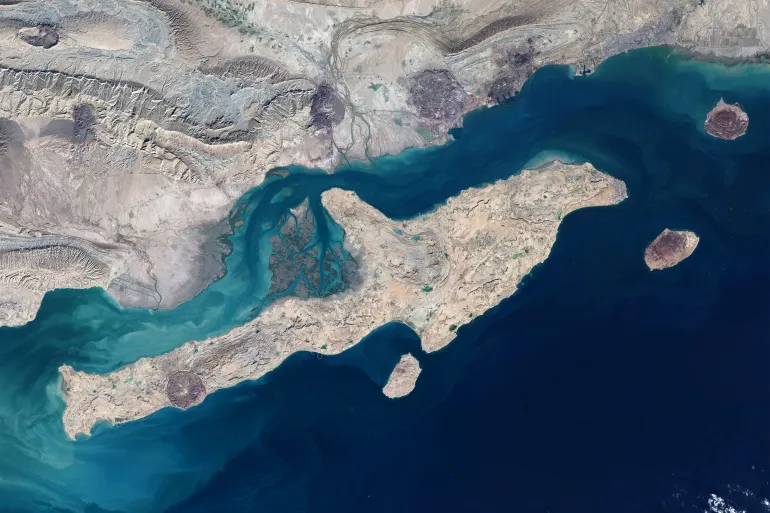
The Strait of Hormuz has remained effectively closed for the past three months, severely affecting global oil supplies and shipping routes.
The conflict began on February 28 after the United States and Israel launched joint strikes on Iran. In response, Tehran tightened control around the Strait of Hormuz, through which nearly 20% of the world’s oil and gas supplies pass.
The prolonged disruption has raised concerns among energy-importing countries and triggered volatility in global oil markets, though recent diplomatic signals have eased some fears of a wider regional conflict.