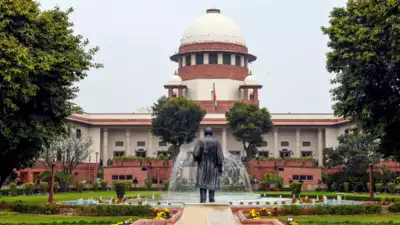
The Supreme Court of India on Thursday raised serious concerns over the current process for appointing the Chief Election Commissioner (CEC) and Election Commissioners (ECs), observing that the existing system effectively allows the government to choose candidates of its preference.
A bench comprising Justice Dipankar Gupta and Justice Satish Chandra Sharma questioned why the selection committee includes the Prime Minister, a Union Cabinet minister, and the Leader of Opposition, arguing that the arrangement structurally favours the ruling government.
Court Says Opposition Role Becomes “Ornamental”
The bench remarked that because two of the three members in the panel are from the government, the outcome would almost always be decided in favour of the ruling side.
The judges observed:
“Why this show-off of independence in the body?”
The court said that under the present framework, the Leader of Opposition’s role risks becoming merely “ornamental.”
According to the bench, if a Cabinet minister is part of the panel alongside the Prime Minister, it is unrealistic to expect disagreement with the government’s choice.
SC Suggests Independent Member Instead of Cabinet Minister
The court clarified that it was not insisting that the Chief Justice of India must necessarily be part of the panel, but stressed that at least one independent member should be included to ensure neutrality and public confidence.
The bench drew comparisons with the appointment process for the director of the Central Bureau of Investigation, where the selection committee includes:
- The Prime Minister
- The Chief Justice of India
- The Leader of Opposition
The judges argued that if such safeguards exist for appointing the CBI director, they are even more important for the Election Commission of India, which oversees free and fair elections and democratic processes.
Court Says Neutrality Begins With Appointment Process
Attorney General R. Venkataramani argued before the court that the independence and neutrality of Election Commissioners arise from how they function after appointment.
However, the bench responded that institutional independence begins with the appointment mechanism itself.
The judges also observed that the Election Commission must not only act impartially but must also appear impartial in the eyes of the public.
SC Seeks Records of Recent EC Appointments
The court also directed the Centre to produce original records related to the appointment of:
- Gyanesh Kumar
- S. S. Sandhu
The bench indicated that the appointments made in 2024 appeared to have been carried out “in a hurry,” and said the deliberations leading to the selection process would now come under judicial scrutiny.
Background of the Dispute
The hearing concerns the validity of a law enacted after the Supreme Court had earlier directed that appointments to the Election Commission should be made by a panel comprising:
- The Prime Minister
- The Chief Justice of India
- The Leader of Opposition
That earlier ruling was intended to strengthen the independence of the Election Commission’s appointment process.