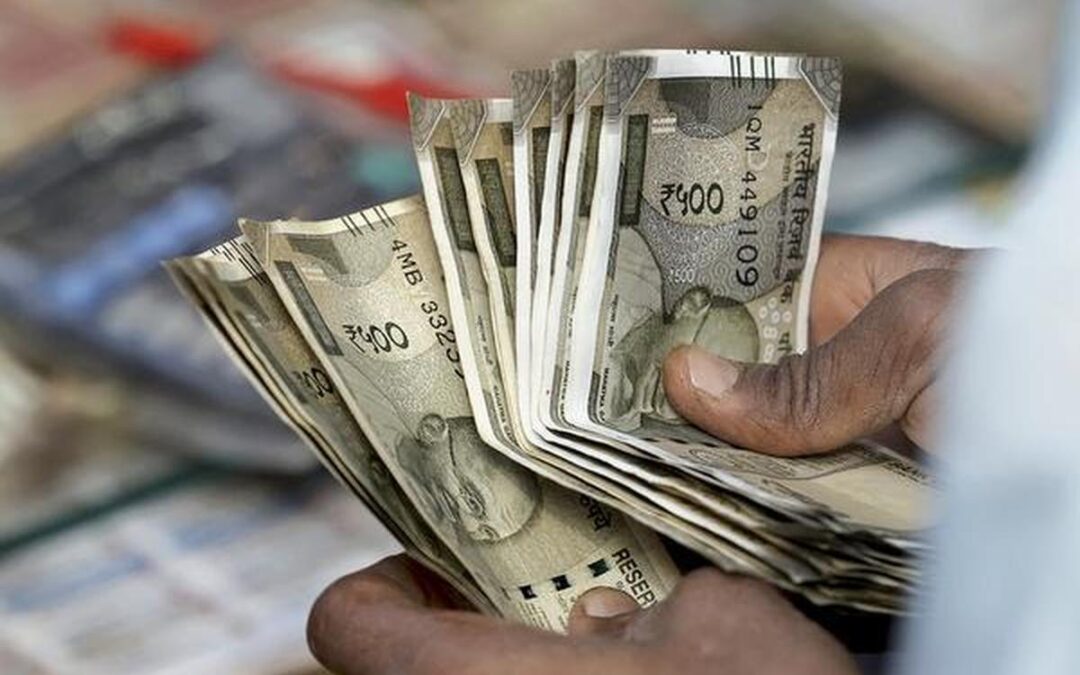
The Indian rupee has come under sustained pressure in 2026, hovering near the ₹94–95-per-dollar range after weakening sharply over the past two years. Analysts say rising crude oil prices, geopolitical tensions, foreign investor outflows, and global economic uncertainty are all weighing heavily on the currency.
The rupee has already declined more than 5% this year after posting a similar fall in 2025, making it one of the weaker-performing major emerging-market currencies. Economists note that the decline is particularly striking because several Asian currencies—including the Taiwan dollar, Thailand baht, and Malaysia ringgit—have strengthened during the same period.
Why the rupee is weakening
The latest pressure on the rupee stems largely from escalating tensions involving the United States, Israel, and Iran, particularly disruptions around the Strait of Hormuz—a key global oil shipping route. India imports more than 85% of its crude oil requirements, making it highly vulnerable to spikes in energy prices.
As crude prices climbed above $100 per barrel, India’s import bill expanded sharply, increasing demand for dollars and putting additional strain on the rupee. Analysts say oil remains the single biggest macroeconomic risk for India’s currency.
Foreign investor outflows add pressure
Another major factor is the continued withdrawal of foreign investment from Indian markets. Overseas investors have reportedly pulled more than $21 billion from Indian equities this year, increasing demand for dollars as investors convert rupees into foreign currency.
Economists warn that high US bond yields, concerns over corporate earnings, geopolitical instability, and expensive Indian equity valuations have contributed to these outflows.
RBI’s efforts to stabilise the currency
The Reserve Bank of India (RBI) has intervened repeatedly in currency markets, selling dollars from its reserves and tightening speculative activity in the forex market. India’s foreign exchange reserves remain near $700 billion, providing a significant buffer.
However, RBI officials have repeatedly stressed that the central bank is not targeting a fixed exchange-rate level. Governor Sanjay Malhotra has said the market should determine the rupee’s value over the long term.
The RBI has also imposed restrictions on speculative currency positions and taken steps to reduce volatility, including tighter controls on derivative trading and forward contracts.
How a weak rupee affects ordinary Indians
A weaker rupee has broad consequences across the economy:
- Imported products such as electronics, machinery, and automobiles become more expensive
- Fuel costs rise because India imports most of its crude oil
- Inflation increases as transportation and logistics costs climb
- Overseas education and travel become costlier
- Gold prices rise in domestic markets due to import dependence
At the same time, a weaker rupee can benefit exporters by making Indian goods and services more competitive globally. Sectors such as IT, pharmaceuticals, textiles, and manufacturing may gain from improved export demand.
Where could the rupee head next?
Currency analysts believe the rupee may witness short-term recoveries if geopolitical tensions ease or oil prices decline. However, the broader outlook remains weak unless global conditions improve substantially.
Some experts expect the dollar-rupee pair to remain in the ₹95–97 range through the end of 2026 if crude oil prices stay elevated and foreign investor sentiment remains cautious. Others warn that renewed geopolitical escalation or further oil shocks could push the rupee even weaker temporarily.
Despite these pressures, analysts note that India’s broader macroeconomic fundamentals remain relatively stronger than many emerging markets. Still, the rupee’s trajectory increasingly depends on global developments rather than purely domestic conditions.