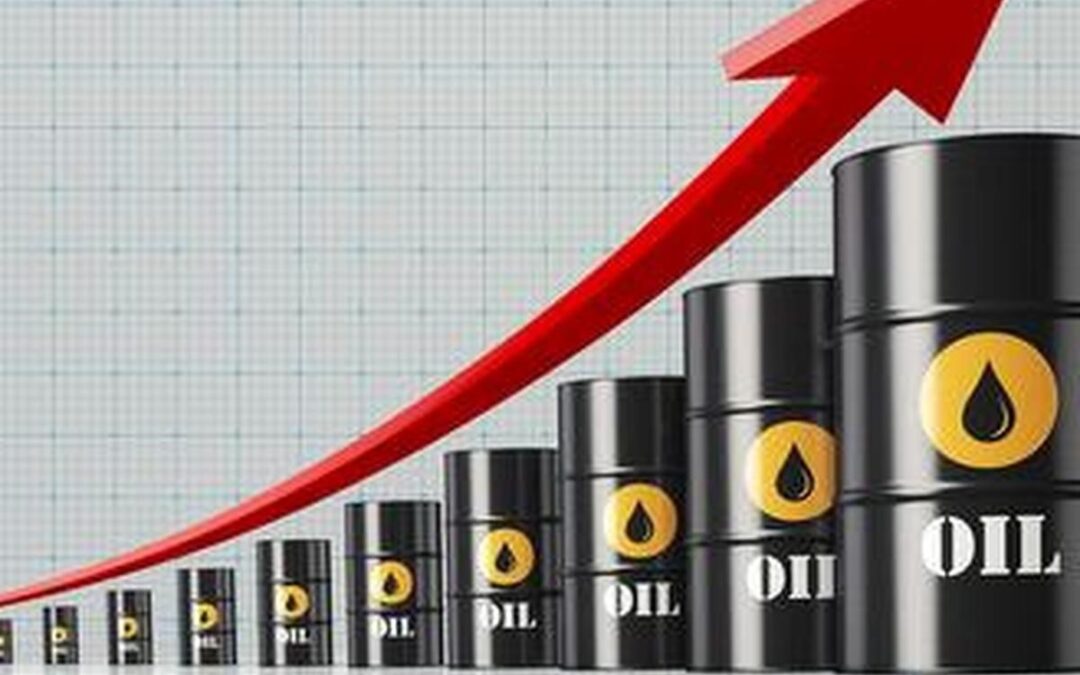
Oil prices moved higher on Friday as renewed tensions between the United States and Iran unsettled global markets, reversing the sharp declines seen earlier this week amid hopes of diplomatic progress.
West Texas Intermediate (WTI) crude climbed 1.95% to $96.66 per barrel after earlier gaining nearly 3%, while Brent crude rose 1.52% to trade at $101.6 per barrel as of 7:05 am IST.
The rebound followed reports that the US military carried out retaliatory strikes on Iranian-linked targets in response to attacks on American forces. Iran, however, accused Washington of violating the ceasefire, alleging that US forces targeted two ships in the Strait of Hormuz and struck civilian areas.
Earlier this week, oil prices had fallen sharply amid expectations that Washington and Tehran were moving closer to an agreement that could restore crude shipments through the Strait of Hormuz.
Brent crude, which had surged above $115 per barrel earlier in the week, dropped 7.8% to $101.27 on Wednesday. Prices briefly slipped below $97 before rebounding after US President Donald Trump warned of military action “at a much higher level and intensity” if Iran rejected his proposed deal.
The Strait of Hormuz remains central to global energy concerns, as the conflict has severely disrupted one of the world’s most critical oil transit routes. Around 20% of global energy supplies pass through the narrow waterway, and any prolonged disruption could intensify inflationary pressures and fuel supply concerns worldwide.
At the same time, scrutiny has grown over unusual market activity linked to oil price movements. According to Reuters, traders placed bets worth nearly $7 billion across oil exchanges, fuel products, and derivatives markets during March and April ahead of major Iran-related policy announcements by the US administration.
The scale of the trades, far exceeding the previously reported $2.6 billion, has triggered concerns about possible misuse of sensitive information. Reuters reported that the US Commodity Futures Trading Commission is examining the activity, though no formal investigation has been publicly confirmed.
Geopolitical tensions in the Middle East have remained elevated since the US and Israel launched joint strikes on Iran on February 28. In response, Tehran tightened restrictions around the Strait of Hormuz, further heightening fears over disruptions to global oil supplies.