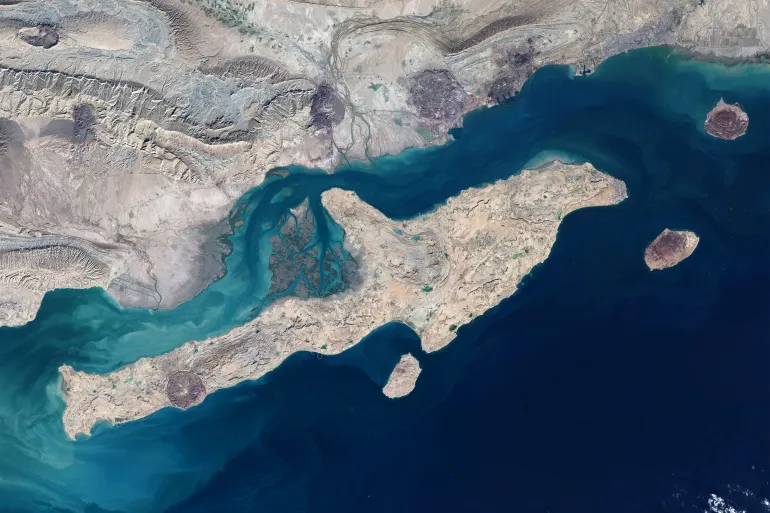
Iran’s paramilitary Revolutionary Guards Navy has reportedly said that safe and stable transit of the Strait of Hormuz will be possible, further bolstering fresh hopes for an imminent peace deal with the United States.
Citing Iranian state media, Reuters reported that the comment came after what the Revoluationary Guards described as the end of “threats from aggressors.” U.S. President Donald Trump earlier announced that so-called “Project Freedom,” a U.S. push to unblock the Strait of Hormuz by using military force to guide ships through the narrow the waterway, was being halted “for a short period of time.”
On Wednesday, an Axios report said the White House believes that it is nearing a deal with Iran on a one-page memorandum of understanding to end the war in the Middle East. The report said the document would lay out a framework for more detailed nuclear negotiations.
Washington expects Tehran to respond on several major points within the next 48 hours, the report said. It added that while nothing had yet to be agreed, this was the closest both sides have come to concluding the conflict since the outbreak of the fighting in late February.
A potential deal would see Iran commit to a moratorium on nuclear enrichment, while the U.S. would agree to remove sanctions and release billions of dollars in currently frozen Iranian funds. Restrictions on the Strait of Hormuz would also be lifted to once again allow transit through the chokepoint, Axios reported.
A spokesperson for Iran’s foreign ministry said they were “evaluating” Washington’s proposal, CNBC reported. Pakistan, which has served as a mediator between the U.S. and Iran, also confirmed that both sides are closing in on an agreement, Reuters added.
Iran has indicated that it will only accept a “fair and comprehensive agreement” in talks with the U.S. to conclude the war, Tehran’s foreign minister said. Speaking in China following a meeting with Beijing’s top diplomat, Iranian Foreign Minister Abbas Araghchi added: “We will do our best to protect our legitimate rights and interests in the negotiations.”
Notably, Beijing is a key buyer of Iranian oil, and media reports have suggested that China could be looking to persuade Tehran not to escalate tensions with the U.S. ahead of a meeting between Chinese leader Xi Jinping and Trump next week.
Trump has previously said that “great progress” has been made in reaching a peace deal with Iran.
The drive, which came into effect earlier this week, was soon followed by a fresh bout of attacks in the strait and the Gulf region, including on sites in the United Arab Emirates.
In a social media post, Trump claimed that the change had come at the request of Pakistan, a frequent mediator between Washington and Tehran, and other countries.
Oil prices retreated in the wake of Trump’s announcement, with , the global oil benchmark, last sliding by more than 10% to below $100 a barrel. Still, the Brent contract is well above pre-war levels of roughly $70 a barrel.
The Strait of Hormuz, a major conduit for a fifth of the world’s oil, remains effectively closed off to tanker traffic, as it has for weeks. Both the U.S. and Iran have set up blockades.
An energy shock caused by continued disruptions to shipping activity in the strait has contributed to fears over a spike in inflation around the world and a slowdown in global growth.
Source: Investing.com