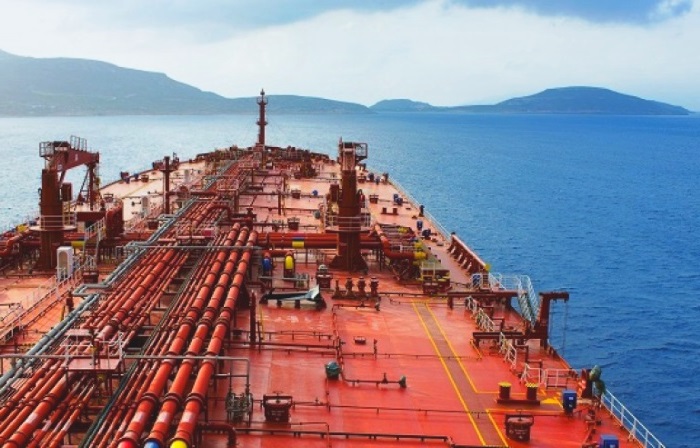
Rates for shipping containers from east Asia and China to the US rose slightly this week while liquid chemical tanker rates saw slight declines on the major trade lanes and a bump for cargoes destined for India.
CONTAINER RATES
Container rates from supply chain advisors Drewry rose by 4% from Shanghai to Los Angeles and are up by 12% from the same week a year ago, and were essentially flat from Shanghai to New York, with rates being down by 1% over the past year.
The following chart from Drewry shows rates ex-Shanghai.
Drewry said the increase on the transpacific route was driven by carrier capacity reductions to counter seasonal demand softness.
According to Drewry’s Container Capacity Insight, nine blank sailings have been announced for next week to manage higher capacity, and they expect freight rates to remain relatively less volatile in the next week.
Rates from online shipping marketplace and platform provider Freightos rose by 7% to the West Coast and by 4% to the East Coast.
Rates are around $2,650/FEU (40-foot equivalent unit) to the West Coast and around $3,800/FEU to the East Coast.
Judah Levine, head of research at Freightos, said much of the increase in container rates is from higher bunker fuel prices even though they are down from recent highs.
Levine said he does not expect significant increases for rates along these routes in the near term.
“Barring a significant spike in fuel prices or an actual shortage in fuel supply and availability, rate behavior since the start of the war may indicate that the chances of significant spot rate increases are slim until peak season,” Levine said.
Rates from ocean and freight rates analytics firm Xeneta were essentially flat this week.
Peter Sand, chief analyst at Xeneta, said freight rates are still elevated from one month ago as disruption in the Middle East continues to have a cascading effect through southeast Asian transshipment hubs.
“Shippers moving cargo to the US via these hubs are paying the price for bottlenecks created thousands of miles away,” Sand said.
Sand said Asia to US West Coast spot rates are up by 22% over the past month, while Asia to US East Coast is up 19%.
“Even the Transatlantic from North Europe to US East Coast – which does not call at Asia transshipment hubs or Middle East ports – has surged 46% compared to one month ago,” Sand said. “The crisis is still very much present – it has simply migrated from the regional to the global.”
Rates on the New York Shipping Exchange Freight Index (NYFI) rose by 8.4% to the West Coast and by 4.9% to the East Coast while rates on the Shanghai Containerized Freight Index (SCFI), which tracks rates for containers leaving Shanghai, edged slightly lower.
Container ships and costs for shipping containers are relevant to the chemical industry because while most chemicals are liquids and are shipped in tankers, container ships transport polymers, such as polyethylene (PE) and polypropylene (PP), which are shipped in pellets. Titanium dioxide (TiO2) is also shipped in containers.
They also transport liquid chemicals in isotanks.
TANKER RATES
US chemical tanker freight rates assessed by ICIS were mixed this week with rates lower on some trade lanes despite continuing upward pressure for several other trade lanes.
There is downward pressure on rates along the USG-Asia trade lane as charterers are still in wait-and-see mode, and besides contract of affreightment (COA) cargoes there is very little seen in the market.
The uncertainty due to the ongoing war in the Middle East continues to dampen the spot market, weighing on rates.
The usual spot cargoes of methanol from Jose to China are the only ones reported, leaving methanol requirements from the region active to Asia.
The market continues to lack any available space as the earliest openings appear to be later in May.
Several fixtures of methanol and various glycols were seen but no deals were reported.
Similarly, rates from the USG to ARA trade lane also held largely steady but are pressured lower for smaller parcels.
However, due to the limited spot activity to Europe the market has lost momentum with only a relatively few number of inquiries seen quoted. The limited amount of available space and higher rates have made it difficult for any new fixtures, which has pressured rates from rising any further.
From the USG to Brazil, this trade lane had seen more inquiries, and there was a limited number of confirmed deals lending upward pressure to spot rates. Most owners remain focused on contract volumes leaving only pockets of open space available throughout May. The usual inquiries of caustic soda, methanol, and various chemicals were seen in the market.
The USG to India route has seen an uptick in inquiries over the last week with only a few confirmed fixtures. Most market players were mainly focused on methanol and MEG cargoes for May loading dates. As there is almost no available space available left for the time being rates are being pressured upward.
Source: ICIS by Adam Yanelli