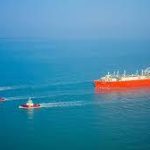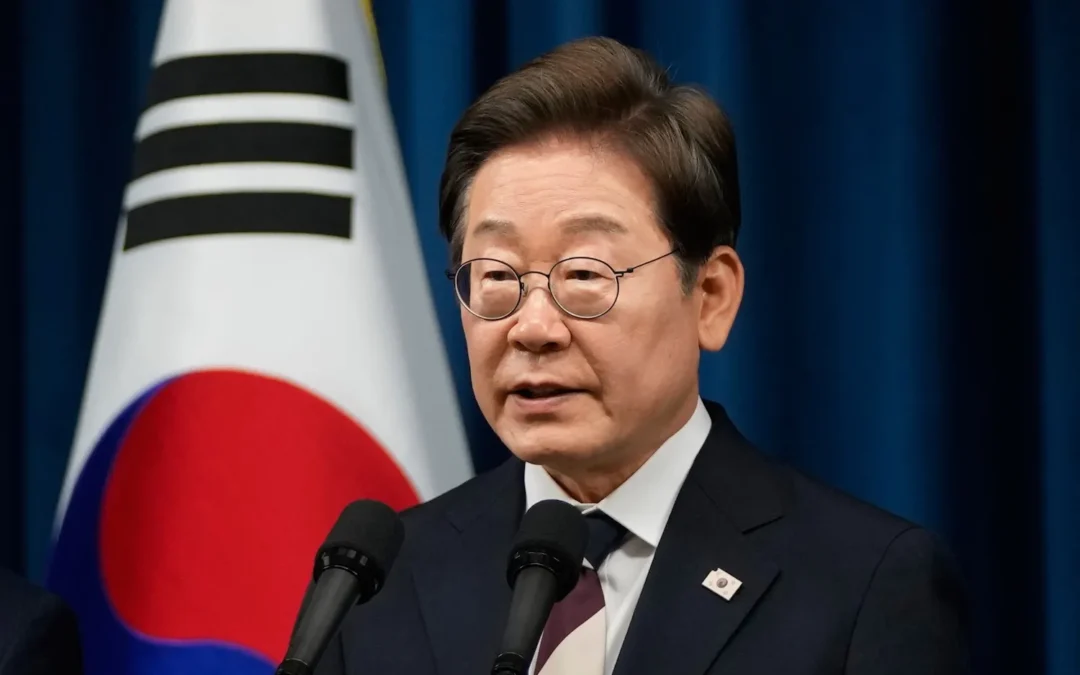
South Korean President Lee Jae Myung has underscored the importance of India–Korea cooperation in safeguarding critical maritime routes such as the Strait of Hormuz, describing their security as essential for the survival of both nations amid rising geopolitical tensions.
In an interview during his state visit to India, Lee highlighted that both countries depend heavily on energy imports passing through the Middle East, making uninterrupted maritime access crucial. He said Seoul would work closely with New Delhi to ensure freedom of navigation and the safe passage of vessels through key global chokepoints.
The remarks come at a time of heightened instability in West Asia, with growing concerns over disruptions to global oil supply routes. Lee emphasised that maintaining secure sea lanes is not just an economic priority but a matter directly linked to national security for both countries.
Calling India an “ideal partner,” Lee pointed to the complementary strengths of the two nations—India’s scale and talent, and Korea’s advanced manufacturing and technological capabilities. He stressed that deeper collaboration across sectors such as defence, shipbuilding, artificial intelligence, and critical minerals could help both nations navigate global uncertainties.
On defence ties, the Korean president reaffirmed support for India’s Atmanirbhar Bharat initiative, noting that Seoul is keen to expand co-production and joint technology development. He cited ongoing projects like the K9 Vajra howitzer as examples of successful collaboration.
Lee also highlighted the need for diversifying supply chains, particularly in critical minerals, to reduce dependence on any single country. He said such diversification is increasingly becoming a matter of economic security.
Addressing broader geopolitical shifts, including changing US trade policies and tensions in the Indo-Pacific, Lee called for stronger coordination among like-minded countries to uphold a rules-based international order. He added that India and South Korea, as emerging global leaders, can play a key role in shaping a more inclusive and resilient multilateral system.
Beyond strategic and economic ties, Lee emphasised growing cultural connections between the two countries. He pointed to rising interest in Korean culture in India and called for deeper collaboration in media, education, and creative industries to strengthen people-to-people ties.
Overall, the visit signals a push to elevate India–South Korea relations into a more comprehensive partnership spanning security, trade, technology, and culture—at a time when global uncertainties are reshaping alliances and priorities.