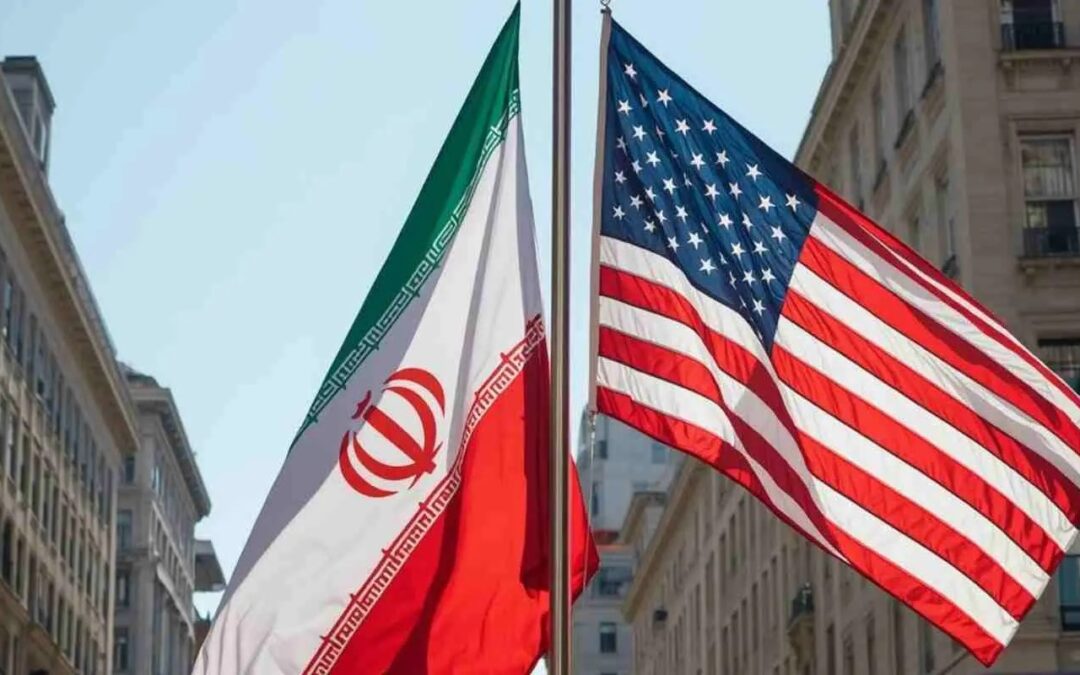
US President Donald Trump has claimed that Washington will work with Iran to retrieve its enriched uranium stockpile and transport it to the United States—an assertion swiftly rejected by Tehran.
In a phone interview, Trump said the US would coordinate with Iran to recover the material “at a nice leisurely pace,” even suggesting excavation efforts using heavy machinery. He described the uranium as “nuclear dust” and indicated the process could begin soon, with further talks expected in the coming days.
However, Iran firmly dismissed the proposal. Foreign Ministry spokesperson Esmaeil Baghaei stated that Iran’s enriched uranium “will not be transferred anywhere,” adding that sending it to the US has never been under consideration.
Trump also said the US would maintain its naval blockade against Iran until a deal is reached, while hinting at a possible visit to Islamabad if negotiations conclude successfully.
Conflicting reports over financial deal
Reports by Axios suggested the US had floated a proposal to release $20 billion in frozen Iranian funds in exchange for Tehran surrendering its uranium stockpile. Earlier discussions reportedly included $6 billion for humanitarian aid, while Iran had sought $27 billion.
Trump denied any such arrangement, insisting that “no money is changing hands.” The White House echoed this stance, declining to comment on anonymous reports.
Talks continue, but gaps remain
Despite Trump stating that Iran had agreed not to pursue nuclear weapons, Iranian officials say major differences persist. A senior official indicated that key issues remain unresolved.
Negotiations are being mediated by Pakistan, with support from Egypt and Turkey. Another round of talks is expected soon in Islamabad.
Technical and military challenges
Experts warn that physically retrieving Iran’s enriched uranium—much of it believed to be stored in underground facilities in Isfahan—would be extraordinarily complex. Some estimates suggest Iran holds around 450 kg of uranium enriched to 60% purity, close to weapons-grade, along with larger quantities at lower enrichment levels.
Such an operation would involve extracting and transporting highly sensitive material under difficult conditions, with significant risks at every stage.
Deep-rooted tensions
Iran maintains that its nuclear programme is for civilian purposes, while the US and its allies view uranium enrichment as a pathway to nuclear weapons capability.
Supreme Leader Ali Khamenei has consistently defended the programme as vital to national security. Analysts say Iran’s commitment to enrichment is tied not only to defence but also to national prestige—making any compromise particularly difficult.