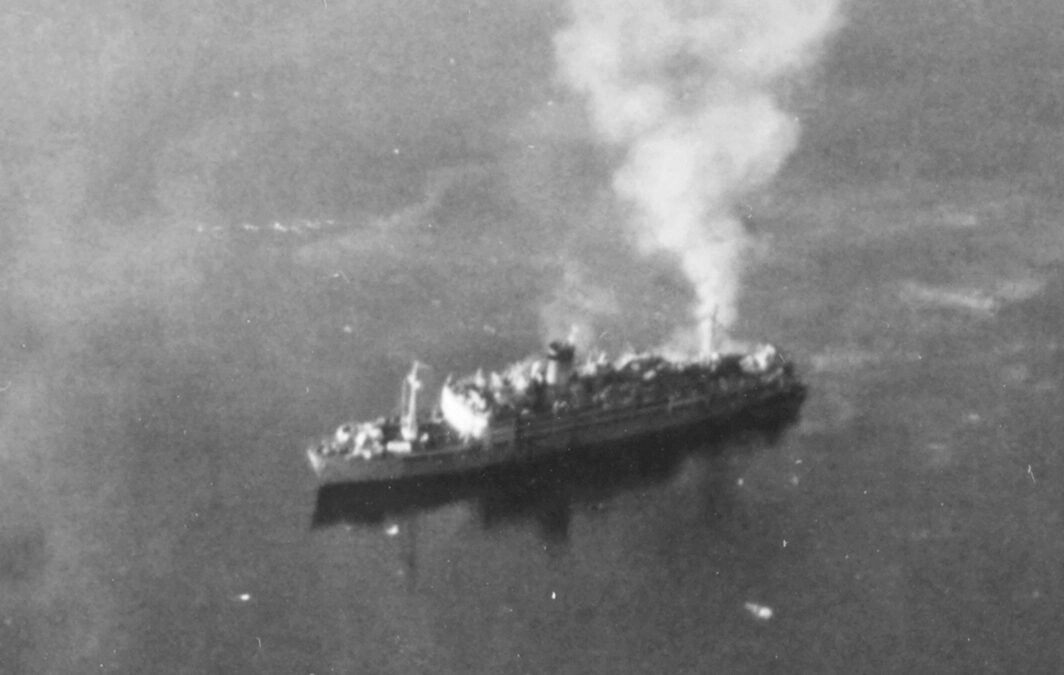
More than 80 years after the sinking of the Japanese “hell ship” Ōryoku Maru in December 1944, the United States has launched a major recovery mission in the Philippine Sea to locate and identify the remains of missing soldiers.
The ship, which was unknowingly bombed by US forces during World War II, went down with over 1,600 Allied prisoners of war on board. Around 250 American personnel remain unaccounted for.
The operation is being led by the Defense POW/MIA Accounting Agency (DPAA), with teams working from the USNS Salvor, a US Navy rescue and salvage vessel. Divers and forensic experts are conducting recovery efforts at depths of about 90 feet in extremely challenging conditions, including near-zero visibility and wreckage tangled in crushed metal.
The mission is part of a long-term effort to account for those who perished under some of the harshest maritime conditions of the Pacific War.
A tragic chapter of World War II
Historical records show that the Ōryoku Maru was transporting Allied prisoners when it was attacked by US Navy aircraft launched from the USS Hornet. American pilots, unaware that prisoners were being held below deck, carried out multiple airstrikes over three days.
Conditions inside the ship were already dire, with overcrowding, dehydration, and suffocation affecting those on board. The attacks ultimately led to the vessel sinking in Subic Bay, claiming the lives of many prisoners.
A complex and delicate recovery mission
The current operation involves around 15 specialised divers carefully excavating the wreck site. The remains are believed to be buried beneath layers of silt and debris, making recovery extremely difficult.
Described as a “twisted mass of steel,” the wreck requires precise forensic techniques to separate human remains from the surrounding structure without causing damage.
Legal protection and international cooperation
The mission is being conducted under the Sunken Military Craft Act of 2004, which grants protected status to US military wrecks and the remains of personnel, regardless of their location.
It is also being carried out in coordination with the Philippine government, reflecting a joint commitment to account for missing service members. The effort is part of the US policy of ensuring the “fullest possible accounting” for those who never returned home.