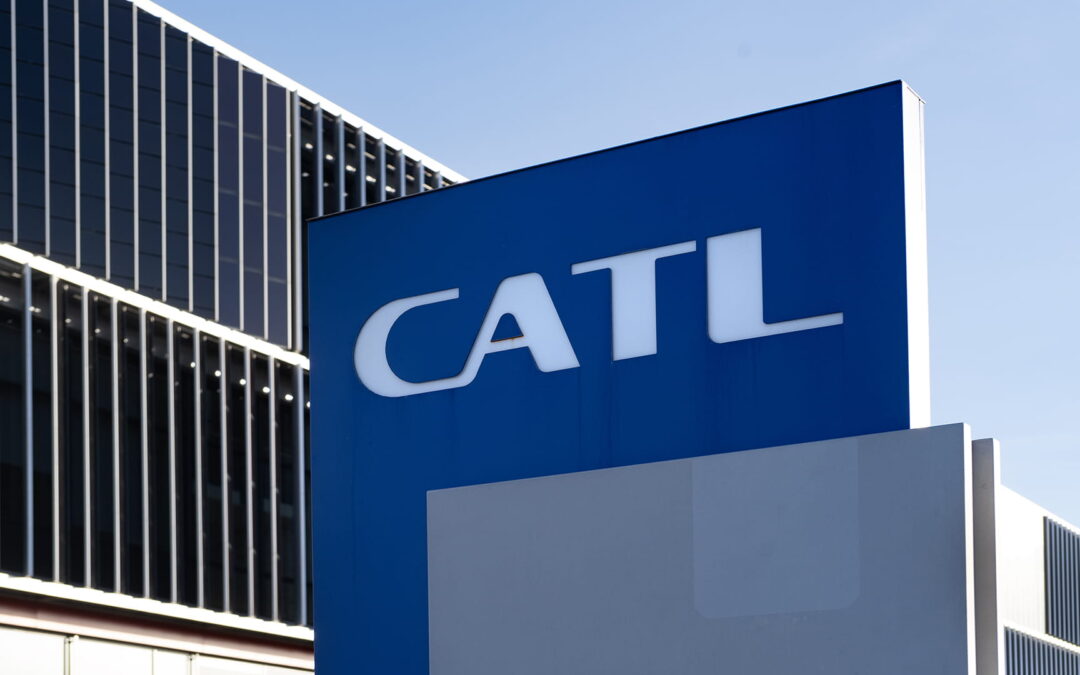
The world’s largest electric vehicle (EV) battery maker, China-based CATL (Contemporary Amperex Technology), has delivered a blunt message to the United States: building a competitive EV industry without China will be extremely difficult.
CATL, which leads the global EV battery market, is followed by another Chinese giant, BYD. Together, the two companies dominate battery production, with CATL alone powering roughly one in three EVs sold worldwide in 2025. BYD, meanwhile, produces its own batteries for its vehicles.
Amid growing calls in the US to restrict the use of Chinese batteries, industry leaders in China appear unconcerned. Robin Zeng, CATL’s founder and China’s fourth-richest individual, has warned that such protectionist measures could backfire, suggesting the US auto market risks falling behind without access to Chinese technology.
Rising tensions over Chinese batteries
Concerns in the US centre on national security and economic dependence. Critics argue that integrating Chinese battery firms into the American supply chain could increase vulnerability to geopolitical pressure and hinder the growth of domestic manufacturers.
In 2025, the US placed CATL on a Pentagon list of companies allegedly linked to China’s military, a designation the company has strongly denied, calling it “erroneous.” While the move does not impose immediate restrictions, it signals caution to American firms considering partnerships.
Why CATL dominates globally
CATL’s rise has been driven by advanced technology and cost efficiency. The company reported profits exceeding $10 billion last year and has established itself as the backbone of the global EV supply chain.
Despite its dominance, CATL’s direct presence in the US and Europe remains limited, partly due to regulatory and political barriers. However, American automakers continue to rely on its technology.
Ford, for instance, is reportedly moving ahead with plans to manufacture CATL-designed batteries at a $3 billion facility in Michigan by licensing the company’s intellectual property. Similarly, General Motors is said to be importing CATL batteries for its Chevrolet Bolt, even absorbing high tariffs due to cost advantages.
Tesla has also partnered with CATL for battery technology at its Nevada facility, particularly for energy storage systems—a segment that continues to grow even as EV demand faces fluctuations.
A broader industry gap
One key challenge for US automakers is producing affordable batteries. Despite significant investments in domestic battery plants, some facilities remain underutilised due to difficulties in achieving the low costs needed for mass-market EVs.
Zeng has also pointed to a cultural and economic gap, suggesting that the US has focused more on high-return sectors like software, chips, and artificial intelligence, while undervaluing battery manufacturing.
A global race for EV leadership
As the EV transition accelerates, the divide between protectionist policies and global supply chain realities is becoming more apparent. While the US aims to build self-reliance, China’s entrenched position in battery production presents a major challenge.
Zeng has made it clear that CATL intends to expand its global footprint, not just by selling products but also by setting technological standards worldwide—underscoring China’s ambition to lead the future of clean mobility.