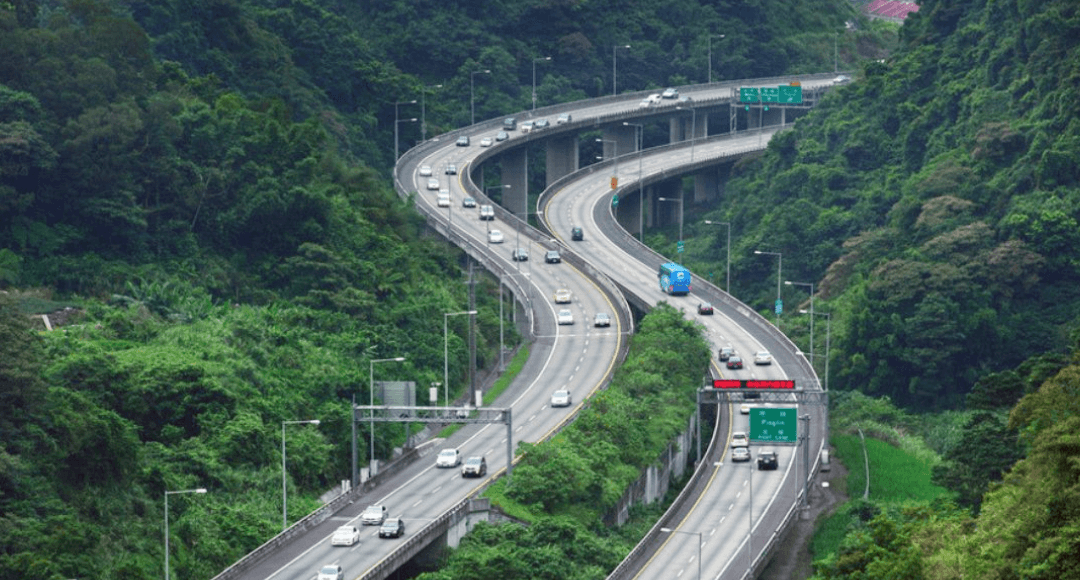
A 40-day observational study conducted along a stretch of the Delhi–Dehradun economic corridor in Uttarakhand’s Shivalik forests has found that several wildlife species are actively using underpasses, indicating that these structures are helping animals move naturally across the roadway.
According to a recent study by the Dehradun-based Wildlife Institute of India (WII), researchers installed 150 camera traps along underpasses across a 3.5-km stretch between Mohand village and Ganeshpur. The cameras were positioned to capture a wide range of terrestrial animals, from small to large species.
The study recorded 40,444 images, documenting 18 distinct wild species using the viaduct at varying frequencies.
Among the most frequent users were nilgai, sambar, chital, hare, golden jackal, and elephants. The study noted that animals tended to avoid areas during periods of human activity, suggesting sensitivity to disturbance.
Bilal Habib, the study’s principal investigator and a professor at WII, said that long-term monitoring — including acoustic and behavioural studies — would help better understand how such infrastructure can reduce habitat fragmentation and guide future road design in ecologically sensitive areas.
The findings are particularly significant as more highway projects are being developed through forested regions, making it crucial to incorporate measures that ensure safe wildlife movement and minimise ecological disruption.
Given the ecological importance of the region, the National Highways Authority of India (NHAI) had commissioned WII to conduct a rapid assessment of wildlife use along the corridor and recommend mitigation strategies. Based on these suggestions, underpasses spanning approximately 11 km were constructed to reduce the project’s impact on local wildlife.