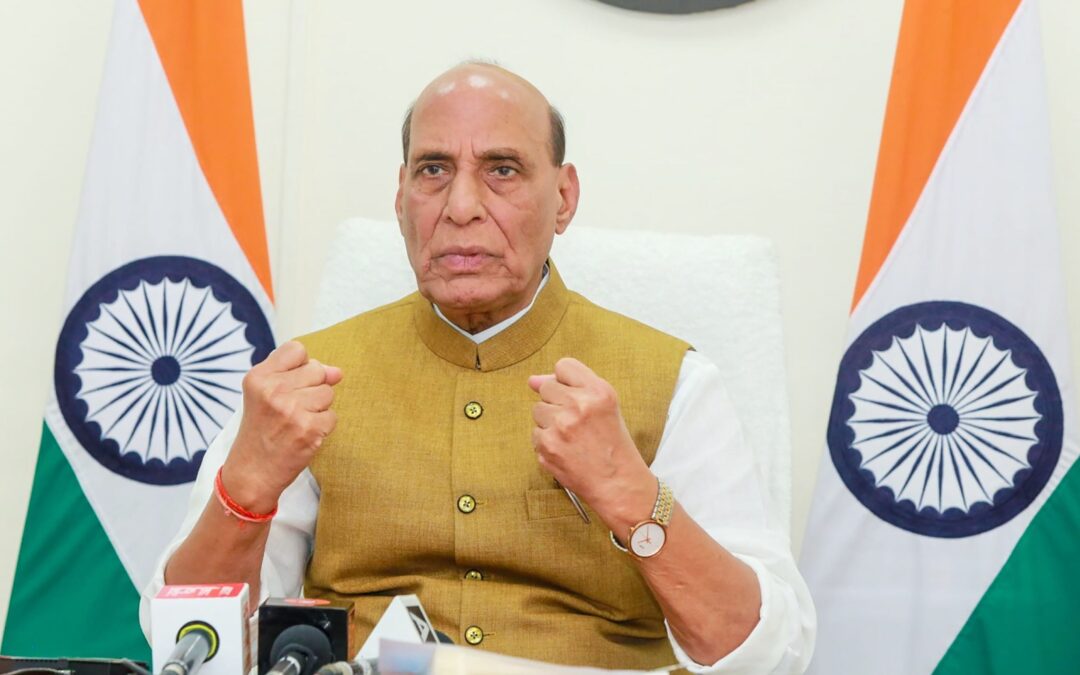
NEW DELHI: Defence Minister Rajnath Singh on Tuesday chaired a high-level review meeting with senior military and defence officials, calling for a detailed study of the ongoing West Asia conflict to strengthen India’s defence preparedness.
During the meeting, Singh was briefed on the evolving global and regional security landscape, including the potential impact of further escalation in West Asia on India. Officials also discussed emerging challenges and strategic opportunities arising from the crisis.
Emphasising the need for proactive planning, the minister directed that operational and technological lessons from the conflict be continuously analysed. He stressed the importance of developing a long-term strategy to enhance India’s defence capabilities.
“We need to formalise a comprehensive, integrated roadmap for the next decade, factoring in lessons learnt, future challenges and emerging opportunities, while ensuring Aatmanirbharta and operational readiness across all fronts,” Singh said.
The meeting was attended by Chief of Defence Staff Anil Chauhan, Indian Air Force chief Amar Preet Singh, Army chief Upendra Dwivedi, Navy chief Dinesh K Tripathi, Defence Research and Development Organisation (DRDO) chairman Samir Kamat, and Defence Secretary Rajesh Kumar Singh.
Key discussions also focused on supply chain resilience, particularly in the procurement and production of defence equipment, as well as maintenance and serviceability of existing military assets — areas that could be affected by prolonged geopolitical instability.
The review comes just days after the Cabinet Committee on Security held a separate बैठक to assess the broader implications of the West Asia conflict, including the availability of critical resources such as food, fuel and energy supplies for civilians.
Last week, Singh credited Prime Minister Narendra Modi for shielding India from the wider fallout of global instability. Reiterating the government’s stance, he said that while conflicts inevitably have global repercussions, India has remained relatively secure due to strategic foresight and preparedness.
He also echoed the Prime Minister’s position that “war is not a solution,” advocating instead for dialogue and diplomacy as the path forward in resolving the crisis.