USA based Air Lubrication System (ALS) innovator Minke Marine says its new patented ALS can disrupt the marine energy-saving equipment market by delivering substantial fuel and carbon savings — with an investment of less than $ 485,000 — following a successful pilot installation.
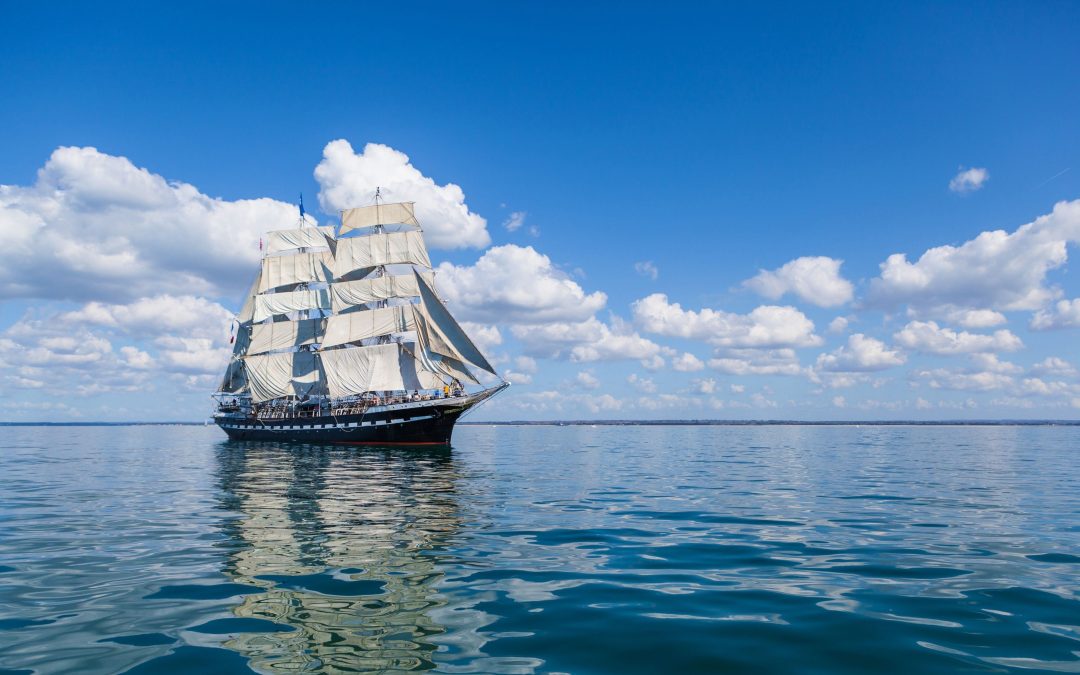
The Minke ALS underwent ten months operation aboard Norwegian shipowner Saga Shipholding Norway AS (Saga) 55,000 DWT general cargo vessel Saga Future. Data shows a gross fuel saving of 7%, while also significantly reducing emissions, positioning it at the forefront of marine energy-saving equipment.
Minke co-founder Giles Candy said the sea trials represent a breakthrough for ALS as shipowners search for proven, low-cost ways to decarbonize.
“First, we’d like to thank Saga for its belief in the project,” he said. “Without their willingness to invest in decarbonization and a new form of ALS innovation, this would not have been possible. The data shows the Minke ALS can generate significant fuel savings for an investment of less than $485,000. We believe this sets a new standard in ALS systems. Given these results are from a slow-steaming general cargo vessel, we believe we can achieve even all vessel types, particularly vehicle and gas carriers and cruise and container ships. This is just the beginning.”
Nils-Otto Bjorhovde, Head of Technical at Saga, said: “Saga has driven efficiency for years and air lubrication offers another step forward. What attracted us to the Minke system is its simplicity and cost-effectiveness. Saga is very happy to have taken what 18 months ago seemed quite a bold step. The fundamentals were there and now that it is operational we can see the system works well with the vessel and crew. We’re very happy with the results and hope to be expanding the project soon.”
Candy said the sea trials collected data using DNV’s March 2025 Recommended Practices for ALS Performance Verification. He confirmed that the data is consistent with crew records and analysis conducted by Saga and vessel manager Anglo-Eastern Ship Management HK (AESM), and that the trials also recorded an increase in vessel speed.
Saga and AESM worked with Minke’s integration partner, Aitken Marine International, and DNV to attain design engineering approval, material/ equipment procurement and fabrication and install the system during a scheduled dry-docking. With a three-month fast-track lead time, the installation was completed ahead of schedule, reflecting the simplicity of the system design.
“This is a low-capacity model of our ALS system using two small, low-profile outlets,” said Candy. “We used as much existing hardware as possible without compromising the fundamentals of the system. The beauty lies in the Minke ALS design, which is simple and easy to install. When the crew switched it on, it worked straight away — no adjustments or modifications required.”
Source: Minke Marine