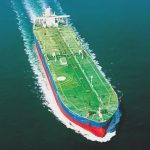
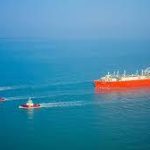
Iran said on Sunday that the Strait of Hormuz remains open to global shipping, except for vessels linked to its “enemies,” referring to the United States and Israel. The statement comes amid a 48-hour ultimatum from US President Donald Trump demanding the full reopening of the critical waterway, which carries roughly 20% of the world’s crude oil supply.
A day earlier, Trump warned that failure to restore access could trigger a new wave of attacks, stating the United States would strike “various power plants, starting with the biggest one first.”
The Strait of Hormuz—one of the world’s most vital shipping routes—has been heavily disrupted by the escalating Middle East conflict, sharply reducing maritime traffic and increasing risks for ships and crews.
Connecting the Persian Gulf to the Gulf of Oman, the strait is the only sea route to the open ocean. It lies between Iran to the north and the Musandam Peninsula to the south, shared by the United Arab Emirates and Oman. In normal conditions, nearly one-fifth of global crude oil and liquefied natural gas passes through it.
However, since hostilities erupted on February 28, when the United States and Israel carried out joint strikes on Iran—followed by Tehran’s retaliation—access to the waterway has been significantly restricted.
Rising security threats
Since March 1, at least 24 commercial vessels, including 11 oil tankers, have reported attacks or security incidents across the Gulf, the Strait of Hormuz, and the Gulf of Oman, according to the UK Maritime Trade Operations (UKMTO). Four additional incidents claimed by Iran’s Revolutionary Guards remain unverified.
Casualties reported
The International Maritime Organization says at least eight seafarers and dock workers have been killed since the conflict began. Four are still missing, and 10 others have been injured.
Shipping activity collapses
Traffic through the strait has dropped dramatically. Typically handling about 120 vessel transits per day, it saw just 124 commodity carrier crossings between March 1 and 21—a 95% decline. Of these, 75 were oil and gas tankers, mostly moving eastward out of the strait.
Thousands stranded
Around 20,000 seafarers, along with cruise passengers, port workers, and offshore staff, are currently stranded in the region. The International Maritime Organization estimates roughly 3,200 vessels are present, with up to two-thirds being large commercial ships.
Data from Clarksons shows about 250 oil tankers remain in the Gulf, accounting for roughly 5% of global crude tanker capacity.
Costs surge
The disruption has driven up costs significantly. Ship fuel prices have risen by about 90% since the conflict began, according to Ship and Bunker. Meanwhile, the cost of transporting a barrel of crude has doubled since the start of the year, reaching around $10, based on Clarksons data.