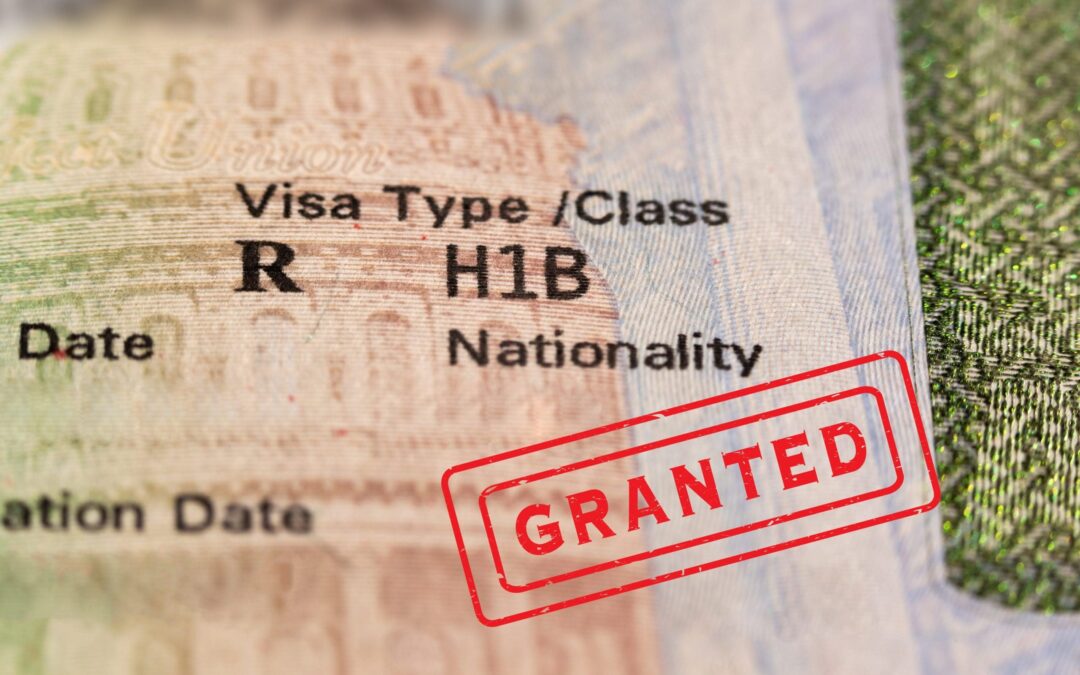
The United States has moved closer to revising wage regulations for foreign workers after a proposed rule impacting the H-1B visa and employment-based green card process cleared review by the Office of Management and Budget (OMB). The development could ultimately raise minimum salary requirements for sponsored employees.
The proposal, submitted to the OMB two months ago, is expected to be published soon for public comment before being finalised. Prevailing wage norms determine the minimum salary US employers must pay foreign workers based on occupation and geographic location. Any revision to this system directly influences hiring costs, sponsorship decisions and eligibility criteria.
Although the full regulatory text has not yet been made public, immigration experts anticipate changes in the methodology used to calculate wage levels, potentially increasing required pay thresholds across several job categories.
During President Donald Trump’s earlier term, the Department of Labor introduced a rule in October 2020 that sharply raised wages for H-1B workers and employment-based green card applicants — in some cases by 40% to 100%. That rule was later struck down in court following challenges by groups including the U.S. Chamber of Commerce, the Bay Area Council, and Stanford University, and was subsequently withdrawn. The Biden administration had explored issuing revised wage rules but eventually put the plan on hold.
The latest move carries particular significance for Indian professionals, who represent the vast majority of H-1B visa holders and a substantial share of employment-based green card applicants, especially in the technology and healthcare sectors.
According to a report by the U.S. Citizenship and Immigration Services, 71% of all H-1B approvals in fiscal 2024 — roughly 2.8 lakh petitions, including extensions — were granted to Indian nationals. Chinese beneficiaries accounted for around 47,000 approvals, or approximately 12% of the total.
Typically, proposed federal rules are open for public comment for 30 to 60 days. However, immigration specialists suggest the window may be limited to 30 days to speed up finalisation. The revised wage framework could apply to H-1B beneficiaries selected in the 2027 season. Registrations for the H-1B cap visa are scheduled to open between March 4 and March 19.
Earlier reports have indicated that many sponsoring employers are already cautious about participating in the upcoming H-1B cap season. Proposed changes — including replacing the random lottery with a wage-weighted selection system that favours higher salary levels — have added to industry concerns.
Additionally, a proposed $100,000 entry fee on new H-1B petitions for beneficiaries outside the US — currently facing legal challenges — has prompted some companies to reconsider hiring plans. Employers are increasingly looking to recruit F-1 students already in the US who can transition to H-1B status, as the proposed fee would not apply in such cases. Meanwhile, visa processing in India has reportedly slowed due to enhanced social media vetting requirements.