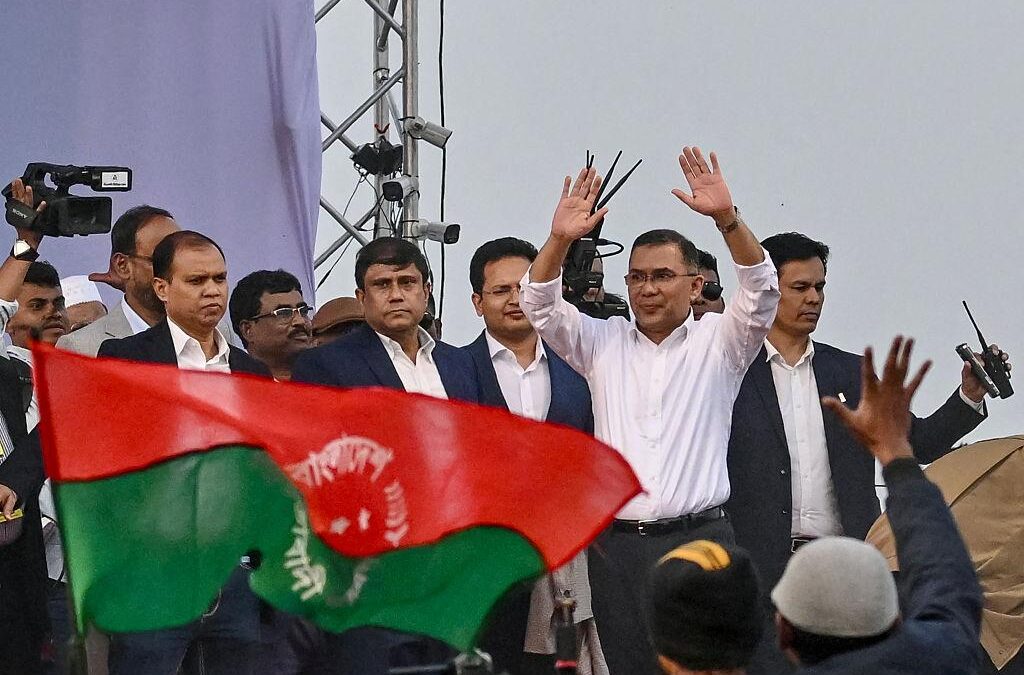
Prime Minister Narendra Modi was among the first world leaders to congratulate Tarique Rahman after the Bangladesh Nationalist Party (BNP) secured a decisive victory in Bangladesh’s parliamentary elections.
In a post on X and a subsequent phone call, Modi said the outcome reflected the trust reposed by the people of Bangladesh in Rahman’s leadership. He pledged to work closely with the incoming leadership to deepen bilateral ties and advance shared development goals. “As two close neighbours with deep-rooted historical and cultural ties, I reaffirmed India’s continued commitment to the peace, progress, and prosperity of both our peoples,” Modi said.
India had earlier refrained from sending election observers but effectively endorsed the process through the Prime Minister’s outreach. Modi’s message followed months of calibrated engagement with the BNP leadership, including gestures of support toward Rahman’s late mother and former prime minister, Khaleda Zia. After her demise, India sent external affairs minister S Jaishankar to attend her funeral, and Modi wrote to Rahman acknowledging Zia’s contributions to Bangladesh’s development and bilateral ties.
New political landscape in Dhaka
With Awami League — led by former prime minister Sheikh Hasina — now proscribed, a clear majority for BNP was widely seen in New Delhi as the most workable outcome under the circumstances. However, the strong performance of Jamaat-e-Islami, which won 68 seats — far exceeding its previous best of 18 — is likely to heighten security concerns in India.
The United States was the first country to congratulate Rahman, though at the ambassadorial level, while Pakistan President Asif Ali Zardari was among early regional leaders to publicly reach out.
Ahead of the polls, India had conveyed to BNP leaders that it sought peace, stability, inclusion and democracy in Bangladesh, even as it continued to host Hasina. Rahman is understood to have responded positively to India’s outreach, indicating Dhaka’s desire for a more “balanced” relationship with its neighbour.
Contentious issues remain
Despite the diplomatic warmth, several sensitive issues are expected to remain on the table. The BNP manifesto suggests the new government is unlikely to soften its stance on border killings, sharing of transboundary river waters, or the demand for Hasina’s extradition.
Rahman is also expected to reopen channels with Pakistan and may push for an early revival of the SAARC summit process. Since Hasina’s departure, both Pakistan and China have intensified engagement with Dhaka, adding a strategic dimension to India’s recalibration.
For New Delhi, key concerns will include security in the Northeast, rising radicalisation, and the safety of minority communities — particularly Hindus — in Bangladesh. India is also likely to expect sensitivity to its strategic interests as Dhaka recalibrates ties with Islamabad and Beijing. During Hasina’s tenure, Bangladesh expanded economic cooperation with China, though largely without undermining India’s core security interests.
Reform agenda under scrutiny
India will also monitor democratic reforms linked to the July Charter referendum that accompanied the general election and reportedly passed with over 60% support. Proposed changes include the creation of an upper house in Parliament, a two-term limit for the prime minister, and an emphasis on a Bangladeshi — rather than exclusively Bengali — national identity.
As Bangladesh enters a new political chapter, New Delhi appears keen to engage early with the emerging leadership, balancing diplomatic outreach with a watchful eye on security and regional stability.