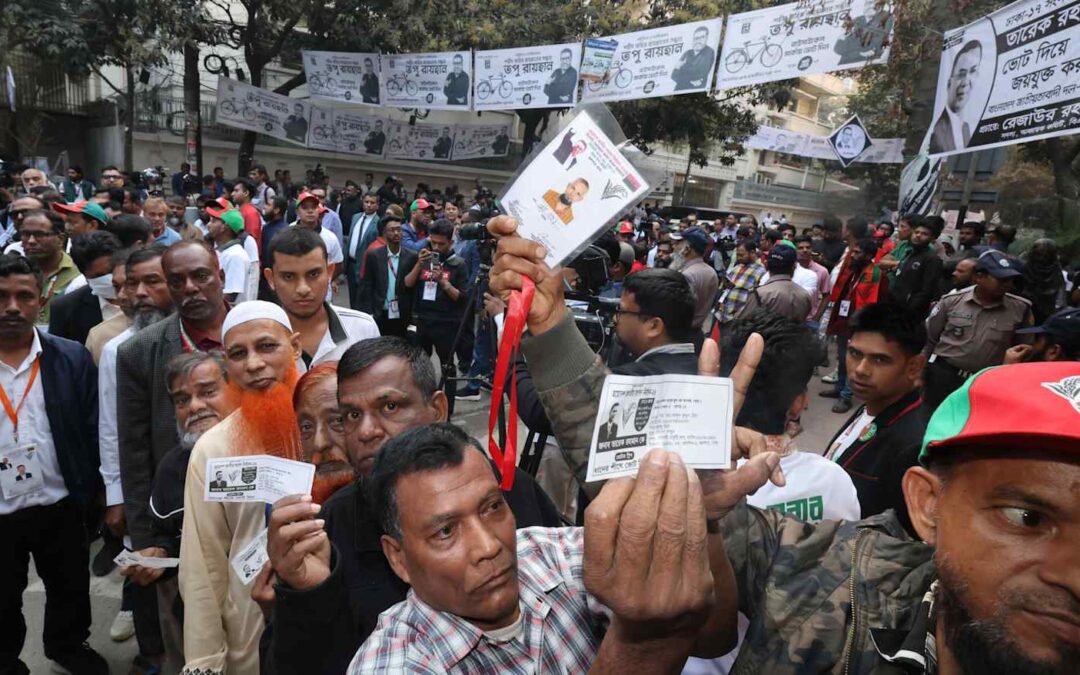
Eighteen months after a student-led revolt toppled a government once considered unassailable, Bangladesh heads to the polls amid heightened security and political uncertainty. Thursday’s general election is the first since the violent 2024 uprising that ended the 15-year rule of former prime minister Sheikh Hasina and sent shockwaves across the region.
For many voters, the election represents more than a routine democratic exercise. It is seen as a crucial test of how the country will rebuild after a period marked by bloodshed, repression, and deep institutional strain.
More than 127 million citizens are eligible to vote in what is widely viewed as a referendum on Bangladesh’s democratic credibility. With the ruling Awami League barred from contesting and Hasina sentenced to death in absentia, the political landscape has narrowed sharply.
The race is now largely focused on a contest between Tarique Rahman’s Bangladesh Nationalist Party and an Islamist-led alliance spearheaded by Jamaat-e-Islami. The disciplined campaign led by Jamaat chief Shafiqur Rahman has fuelled speculation about the possibility of Bangladesh’s first government with strong Islamist influence.
As voters line up under tight security, the outcome is expected to shape the nation’s political direction and stability in the years ahead, determining whether Bangladesh can restore public trust in its democratic institutions.