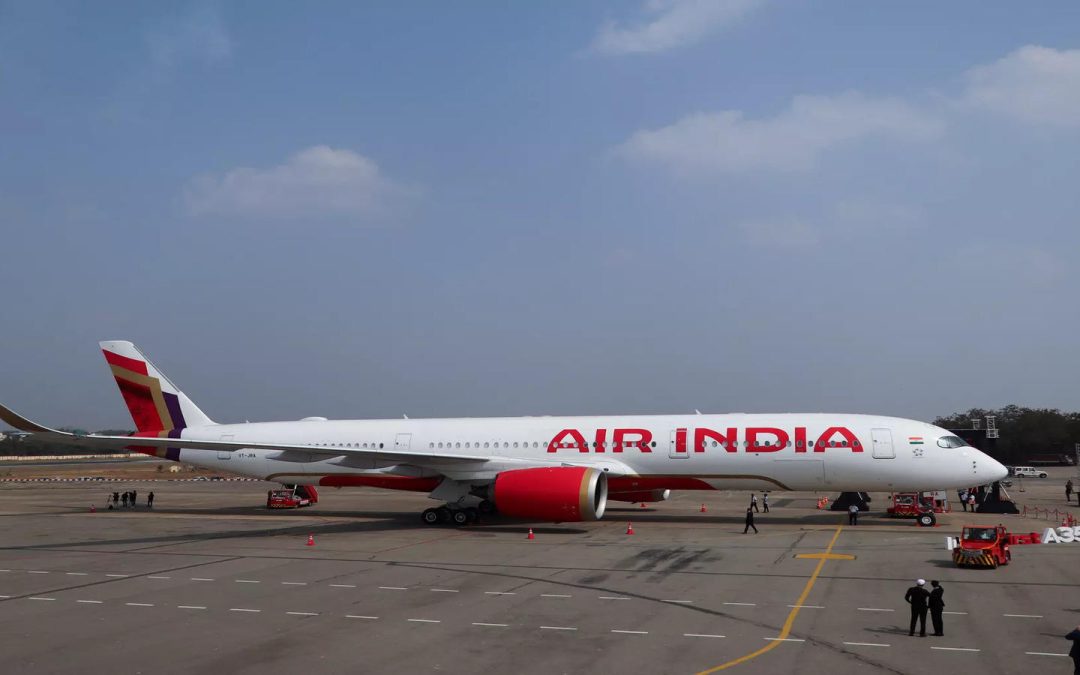
MUMBAI: The UK’s civil aviation regulator has sought an explanation from Air India following media reports of a fuel control switch issue involving a Boeing 787 aircraft in London, asking the airline to detail the maintenance carried out before the aircraft was cleared to operate a flight to Bengaluru.
In a letter to Air India, the UK Civil Aviation Authority (CAA) said the airline must submit a complete response within a week, warning that failure to do so could invite regulatory action. Seeking information from an airline after an incident or accident is a standard practice among foreign regulators to ensure continued compliance with safety standards.
The issue occurred on February 1 in London, when the crew of Air India flight AI-132 observed on two occasions that the left engine fuel control switch did not remain positively latched in the “RUN” position when light vertical pressure was applied. On a subsequent attempt, the switch latched correctly and remained stable, after which the crew proceeded to operate the flight to Bengaluru. The aircraft was grounded there for further inspection.
The Ministry of Civil Aviation said on Tuesday that checks carried out in Bengaluru found both the left and right fuel control switches to be satisfactory.
Air India, in a statement on Wednesday, said it had completed precautionary re-inspections of the Fuel Control Switch (FCS) across its entire operational fleet of Boeing 787 aircraft and found no issues. “The inspections were undertaken in an abundance of caution following an observation reported by one of our pilots,” the airline said.
The carrier also acknowledged what it described as proactive oversight by the Indian aviation regulator, the Directorate General of Civil Aviation (DGCA), which conducted independent inspections and subsequently cleared the FCS. Air India added that it would fully comply with the regulator’s directive to circulate original equipment manufacturer (OEM)-recommended operating procedures related to the Fuel Control Switch to all flight crew.
Air India operates the Boeing 787 Dreamliner on several long-haul international routes, including services to the UK.
Meanwhile, the Safety Matters Foundation, an aviation safety NGO, on Wednesday submitted a complaint to the Aircraft Accident Investigation Bureau (AAIB), responding to the ministry’s statement that the component was functioning satisfactorily. The Foundation cautioned that issuing a public “clean chit” to the Fuel Control Switch while an AAIB investigation remains active amounts to an “institutional bypass,” which could contaminate evidence, prejudice the investigative narrative and erode public trust.
The complaint said public exoneration of a system by a regulatory authority during an ongoing independent safety investigation risks compromising the sealed chain of custody required for material evidence in a major probe. It also warned that framing a potential causal factor as “resolved” could influence witness testimony, expert analysis and the direction of the investigation, thereby undermining confidence in the AAIB’s statutory independence.
“The AAIB’s mandate is to find the cause, not to confirm pre-stated conclusions,” said Capt. Amit Singh, Founder-Director of the Safety Matters Foundation and a senior aviation safety advocate. “When another agency publicly closes the book on a system that may be relevant to an open crash investigation, it risks not just the evidence, but the integrity of the truth-seeking process.”
The Foundation urged the AAIB to immediately take custody of all evidence related to the AI-132 incident under a sealed chain of custody, issue a preservation order directing all parties not to interfere with relevant material, and publicly reaffirm the independence of its investigation. It also called on the AAIB to examine whether communications issued by the DGCA may have adversely impacted the ongoing AI-171 investigation.