Weathernews Inc. has issued a stark warning to the global shipping industry, noting that the major strides made in vessel efficiency over the past decade are increasingly being cancelled out by a more unpredictable and hostile operating environment.
While ships have become cleaner and more technically efficient, they face rising disruption from volatile weather, shifting regulations, and geopolitically altered trade routes that work directly against those fuel savings.
The company believes that the industry is now entering a new ‘era of adaptation’, where the ability to protect time and fuel performance in deteriorating conditions will define the next decade of performance. Weathernews argues that greater vessel efficiency does not make voyages more predictable, and that relying on fixed plans or individual judgement is no longer sufficient to manage the complexity and volatility of modern shipping.
In the current operating reality, risk acts as a chain reaction where a single weather deviation creates a cascade of consequences. Delays lead to increased fuel burn, emissions, and higher carbon costs, which in turn trigger speed changes that can negatively impact a vessel’s CII rating performance.
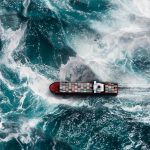
The Red Sea provides an instructive example of this new reality; the Houthi threat has forced a massive shift in global trade routes, pushing vessels away from the Suez Canal and onto the more weather-exposed paths around the Cape of Good Hope. This transition is occurring alongside a marked increase in bad weather days, meaning vessels are spending more time battling the elements rather than benefiting from improvements to their technical design.
This volatility is now manifesting in a breakdown of traditional performance assessment. Under traditional logic, heavy weather periods are typically excluded from Charter Party (CP) performance warranties. As vessels encounter more frequent heavy weather on the Cape route, a greater portion of each voyage is excluded from measurement, creating a critical data gap.
For an operator who has just invested millions in the latest efficiency technology, this is a commercial blind spot: they can no longer measure if their investments are delivering the intended ROI because weather interference is masking true vessel performance. Ultimately, this uncertainty undermines investment confidence and complicates capital allocation decisions worth hundreds of millions of dollars.
Because these commercial uncertainties ultimately affect future charter selection and investor confidence, every delayed decision now impacts the very core of the shipping business.
To address these structural weaknesses, Weathernews is calling for a shift toward a more dynamic kind of resilience, where operators treat volatility as a normal input rather than an exception.
By using AI-driven predictive intelligence and probabilistic forecasting, fleet managers can turn storm probabilities into clear route scenarios, gaining days to negotiate with charterers rather than hours to react. This level of foresight allows operators to anticipate disruption before it impacts cost or schedule, ensuring that commercial performance and competitive advantage are protected even when external conditions move against them.
Craig West, CEO Europe, Weathernews, said: “In today’s volatile industry, the reality is that efficiency gains are increasingly being wiped out by factors beyond an operator’s control. As geopolitical shifts force vessels into different operating environments, the resulting weather interference is masking true performance and obscuring the ROI of green technology. It is clear that the industry must move beyond static planning and adopt a mindset of constant adaptation, where volatility is treated as a manageable input rather than an unexpected crisis.”
For four decades, Weathernews has supported safe operations through changing weather, and it now seeks to help the industry move beyond reactive management. By connecting weather risk with technical and commercial impact, the company aims to give fleets the confidence to make better decisions earlier, ensuring that nothing is left to chance in an increasingly volatile world.
Source: Weathernews