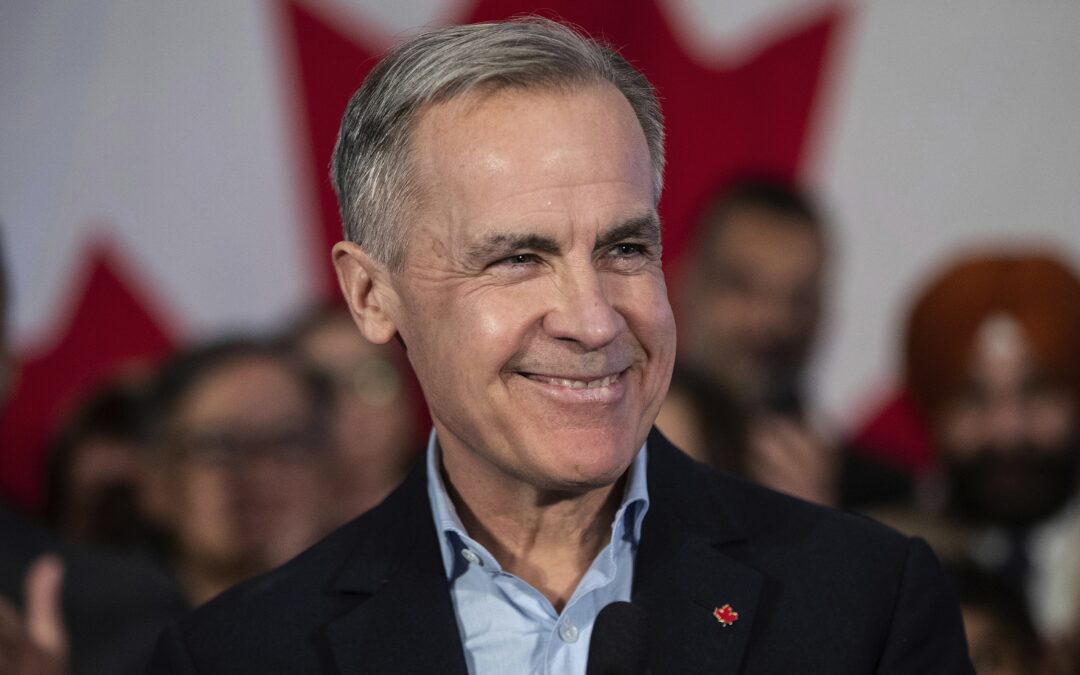
Canadian Prime Minister Mark Carney on Tuesday delivered a sharp critique of the post-World War II “rules-based order,” calling it “partially false” and, in many ways, a “fiction” because the most powerful nations routinely exempted themselves when it suited their interests.
Speaking in a strongly worded address at the World Economic Forum in Davos, Carney said international law and global rules had never been applied equally. “We knew the story of the international rules-based order was partially false — that the strongest would exempt themselves when convenient, that trade rules were enforced asymmetrically, and that international law was applied with varying rigour depending on the identity of the accused or the victim,” he said.
In an unusually candid assessment from a Western leader, Carney acknowledged that Western countries had long avoided confronting the gap between rhetoric and reality, largely because American dominance helped deliver certain global public goods. He described claims of neutrality and equal application of rules as a convenient illusion.
“It was useful, and American hegemony, in particular, helped provide public goods: open sea lanes, a stable financial system, collective security, and frameworks for resolving disputes,” he said. “So we placed the sign in the window. We participated in the rituals. And we largely avoided calling out the gaps between rhetoric and reality. That bargain no longer works. Let me be direct: we are in the midst of a rupture, not a transition.”
Without naming US President Donald Trump — who has taken an increasingly hostile tone towards Canada since before returning to office — Carney appeared to target Washington’s approach. “You cannot live within the lie of mutual benefit through integration when integration becomes the source of your subordination,” he said.
Carney warned that over the past two decades, crises in finance, public health, energy and geopolitics had exposed the dangers of extreme global integration. More recently, he said, major powers have begun weaponising that integration. “Tariffs are leverage, financial infrastructure is coercion, and supply chains have vulnerabilities to be exploited,” he said.
His remarks come amid renewed global unease over Trump’s foreign policy posture, including his revived push for greater US control over Greenland — a stance that has unsettled Nato allies and intensified concerns in Europe about sovereignty and alliance norms. The episode has reinforced fears that power politics, rather than agreed rules, increasingly shape Western decision-making.
Canada has also been directly affected by Trump’s confrontational approach, having faced repeated tariff threats, trade pressure and provocative rhetoric, including past suggestions that Canada could become a US state. Similar tensions have surfaced with other allies, including France, over trade and defence issues.
Against this backdrop, Carney’s critique reframes economic integration not as a guarantee of shared prosperity, but as a tool of leverage. His message was blunt: the old bargain — silence in exchange for stability — has collapsed in an era defined by coercion and transactional power politics.