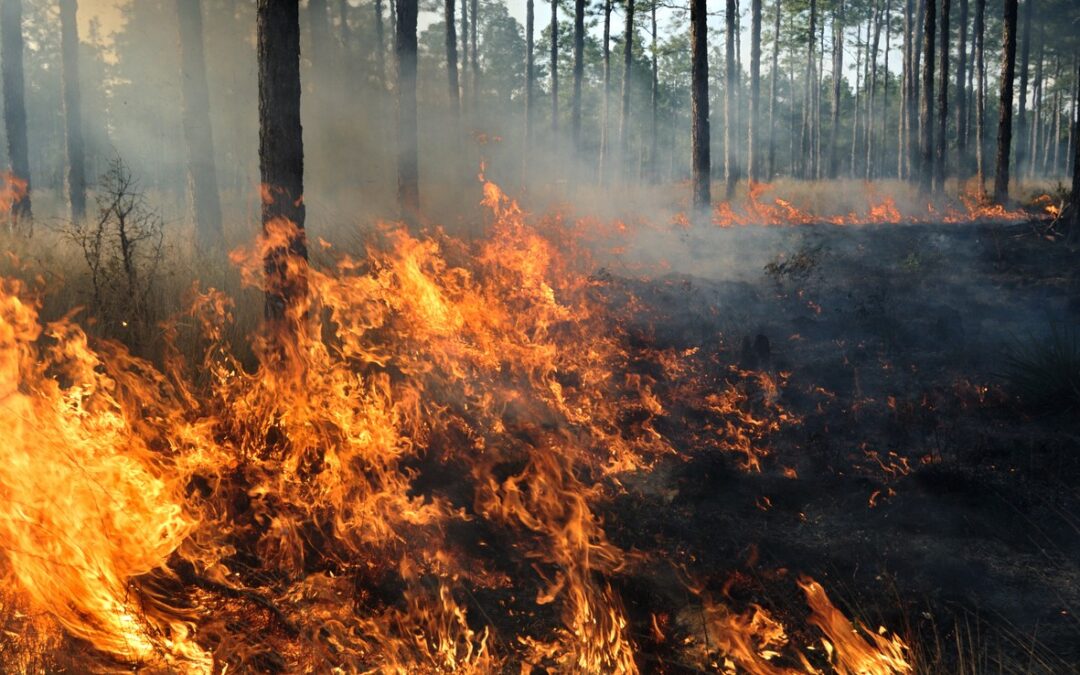
DEHRADUN/KULLU/SRINAGAR: For decades, forest fires in the Himalayas followed a familiar pattern — flaring up in late spring and early summer as rising temperatures, dry winds and accumulated leaf litter made forests vulnerable. Winter, by contrast, was a time of snow, moisture and relative calm. That rhythm is now breaking.
This winter, forests across Uttarakhand — and increasingly in Himachal Pradesh and Jammu & Kashmir — have witnessed frequent and intense fires. Forest officials and scientists say this is no longer an anomaly but a sign of a changing ecological pattern. “Forest fires are part of a natural cycle, but climate variability is compressing and intensifying that cycle,” said Amit Kumar Verma, senior scientist at the Forest Research Institute in Dehradun, who is part of a five-year study on shifting fire regimes in India.
Data from the Forest Survey of India (FSI) shows that since the winter wildfire season began on November 1, Uttarakhand has recorded the highest number of fire alerts in the country — 1,756 — surpassing traditionally fire-prone states such as Maharashtra (1,028), Karnataka (924), Madhya Pradesh (868) and Chhattisgarh (862). While officials stress that not every satellite alert corresponds to an active blaze, the trend is hard to ignore. December, usually a low-fire month, turned out to be the most active in the state in nearly three years.
Forest officials attribute much of the surge to extreme dryness. “We had a completely rainless December. Moisture levels in the forest floor are extremely low,” a senior official said. Himachal Pradesh is facing a similar situation, with no rainfall since the first week of October and scant snowfall in major apple-growing belts such as Kullu, Mandi, Shimla and Chamba. As a result, fires have been reported across several forest circles — including Shimla (62 incidents), Rampur (16), Mandi (8), Great Himalayan National Park-Kullu (6), Chamba and Kullu (4 each), and Bilaspur and Wildlife (South) circle (2 each), according to the state forest department.
The pattern extends further north. Kashmir is also enduring a snow-deficient winter, with fires reported across the Valley and the Pir Panjal range, including Uri, Bandipora, Nishat and Poonch. In December, a forest guard died while battling a blaze in Anantnag district. On January 12, a fire in Poonch triggered a series of landmine explosions along the Line of Control after flames spread into mined areas in the Balakote and Mendhar sectors. “There is nearly a 40% snowfall deficit after three consecutive dry winters,” said Mudasir Mehmood, DFO Awantipora. “With no soil moisture, it’s no surprise that grass becomes highly flammable.”
But officials say dryness alone does not fully explain the scale of the problem. Other factors include stubble burning near forest fringes, burning of biomass and solid waste, and in some cases, villagers deliberately setting fire to forest floors to promote fresh grass for cattle. Experts also point to illegal activities such as poaching or attempts to flush wildlife out of cover.
Former Uttarakhand head of forest force Jairaj said forest fires are rarely caused by a single factor. “In high-altitude areas with valuable wildlife like musk deer, poachers sometimes light fires to corner animals during winter when they are already vulnerable. Climate change adds another layer — everything is dry, and even a small spark can escalate into a major blaze,” he said.
Compounding the situation is the erosion of traditional forest management practices. Earlier, community-led grazing and clearing helped reduce the buildup of dry grass and leaf litter. With migration and changing livelihoods, these practices are fading, allowing combustible material to accumulate. “Villagers used to regularly clear forest undergrowth. That system is weakening,” an official noted.
On the ground, residents are already feeling the anxiety. In Jyotirmath (formerly Joshimath), 61-year-old Sarvani Devi has been watching smoke rise from the nearby forest for days. “If these fires spread, everything will turn to ash. That is our biggest fear. Somehow, these mountains where we have lived all our lives don’t feel as peaceful anymore,” she said.