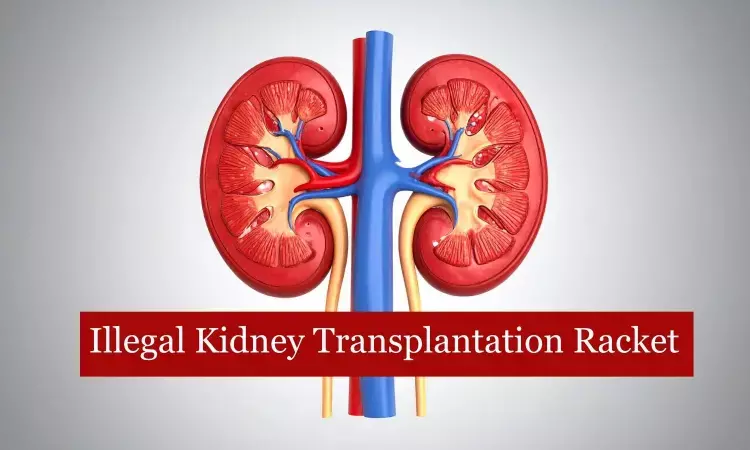
NEW DELHI: In the gleaming corridors of Delhi’s top hospitals, an old menace keeps resurfacing. Every few years, arrests and investigations expose once again the city’s enduring struggle with illegal kidney transplant rackets—an underground trade that thrives alongside world-class medical care.
The recent arrest of a gastroenterologist, coming soon after a senior transplant surgeon was taken into custody in 2024, has revived attention on this recurring problem. Investigators say the pattern has remained unchanged for decades: impoverished donors, affluent recipients, and a web of middlemen posing as coordinators who exploit loopholes in the system.
Delhi’s tryst with the illegal organ trade dates back years. In 2008, Amit Kumar, infamously dubbed “Dr Horror,” was exposed as the face of a massive racket operating across Delhi and Gurgaon, with more than 600 illegal transplants allegedly carried out in a residential building. Despite multiple arrests, the crackdown failed to deter the trade, with key accused returning to operations after securing bail.
In 2016, assistants to senior nephrologists at a major hospital were accused of running what investigators called a “kidney factory,” forging documents to pass unrelated donors off as relatives. Three years later, in 2019, Delhi Police uncovered a trade estimated at over Rs 100 crore, involving hospital staff, middlemen, and former donors who had turned agents to escape debt.
The issue again shook the medical community in July 2024, when a woman doctor was arrested for allegedly playing a key surgical role in an international syndicate. According to police, donors and recipients from Bangladesh were funnelled into India, with illegal transplants conducted at a secondary facility in Noida. A chargesheet said the gang operated across 11 hospitals in several states, identifying at least 34 illegal transplants and targeting patients undergoing treatment in cities ranging from Delhi and Faridabad to Gujarat.
Cross-border links have also surfaced repeatedly. Last year, Nepal Police dismantled a kidney trafficking network that lured impoverished villagers from Nepal to Delhi, housing them in Lajpat Nagar while coordinating illegal surgeries through private hospitals.
Now, investigators say another specialist—a gastro surgeon—has been caught in the net, allegedly linked to a pan-India operation with connections extending to Cambodia and China.
According to senior police officials, Delhi’s geography and medical reputation make it uniquely vulnerable. “It sits at the intersection of extreme poverty and cutting-edge healthcare. Long waiting lists for legal transplants create a vacuum that the black market is quick to exploit,” one officer said. The modus operandi, they added, remains largely the same: forged Aadhaar cards, fake relationship certificates, and the exploitation of debt-ridden donors.
Despite strict laws under the Transplantation of Human Organs Act, the staggering profits—where a transplant may cost up to Rs 1.5 crore while the donor receives barely Rs 5 lakh—ensure that dismantling one racket often only gives way to another. For a city that aspires to be a global healthcare hub, the persistent shadow of the illegal kidney trade underscores the urgent need for a transparent, robust organ donation system that protects the vulnerable from exploitation.