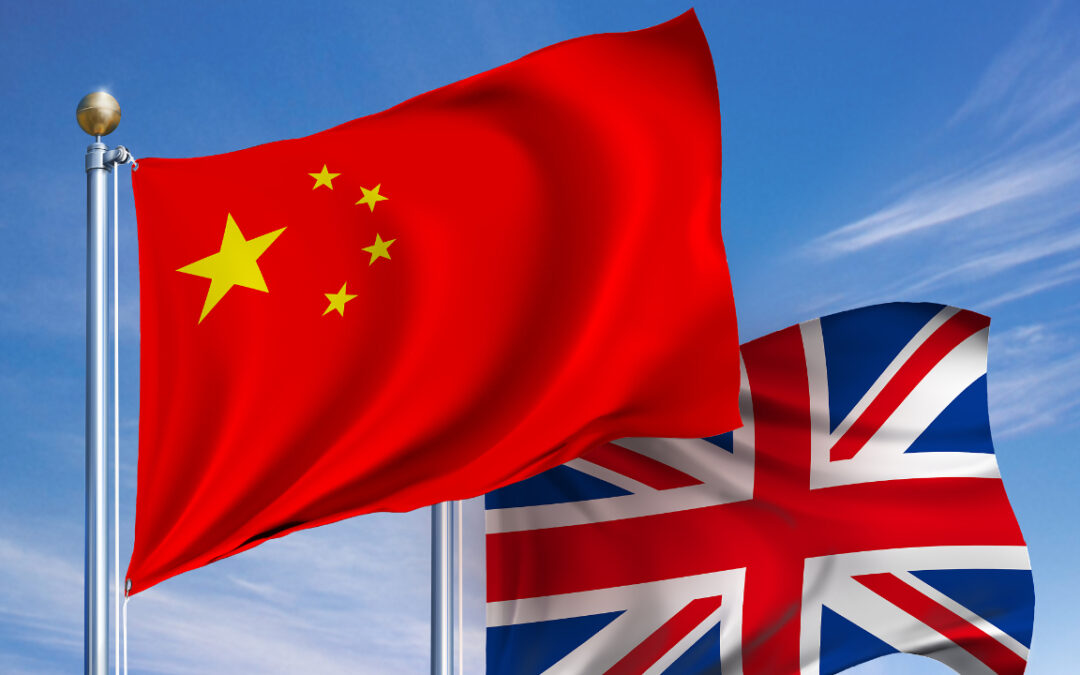
Beijing on Wednesday sharply criticised Britain’s decision to sanction two China-based technology companies over alleged cyber operations targeting the UK and its allies, calling the move “political manipulation” and escalating diplomatic tensions over cybersecurity.
The UK Foreign Office on Tuesday announced sanctions against i-Soon and Integrity Technology Group, accusing them of carrying out “vast and indiscriminate cyber activities” that threatened public services and national security. Several Russian-linked entities were also sanctioned for allegedly spreading pro-Moscow disinformation.
Responding at a regular briefing, Chinese foreign ministry spokesperson Guo Jiakun said China had lodged “stern representations” with British officials in both Beijing and London. “China expresses strong dissatisfaction and firm opposition to the UK’s practice of using cybersecurity issues for political manipulation,” he said.
A policy paper released alongside the sanctions warned that cyber and information warfare pose an increasing threat to democratic societies. UK foreign secretary Yvette Cooper said the activities attributed to the two Chinese firms “impact our collective security and our public services, yet those responsible operate with little regard for who or what they target”.
The paper noted that across Europe, so-called hybrid threats—combining physical, cyber and information warfare—are increasingly aimed at undermining democratic institutions and critical infrastructure.
Among the Russian entities targeted is Rybar, a widely followed platform whose multilingual Telegram channels reach millions. Cooper said Rybar employs “classic Kremlin manipulation tactics, including fake ‘investigations’ and AI-driven content,” and operates while being partially funded by the Russian state and linked to intelligence networks.
Also sanctioned were the Pravfond Foundation, accused of acting as a front for Russian foreign intelligence, and nationalist philosopher Alexander Dugin along with his think tank, the Centre for Geopolitical Expertise. Dugin is known for promoting “neo-Eurasianism”, an ideology advocating a Russia-led geopolitical project stretching from Europe to Asia.