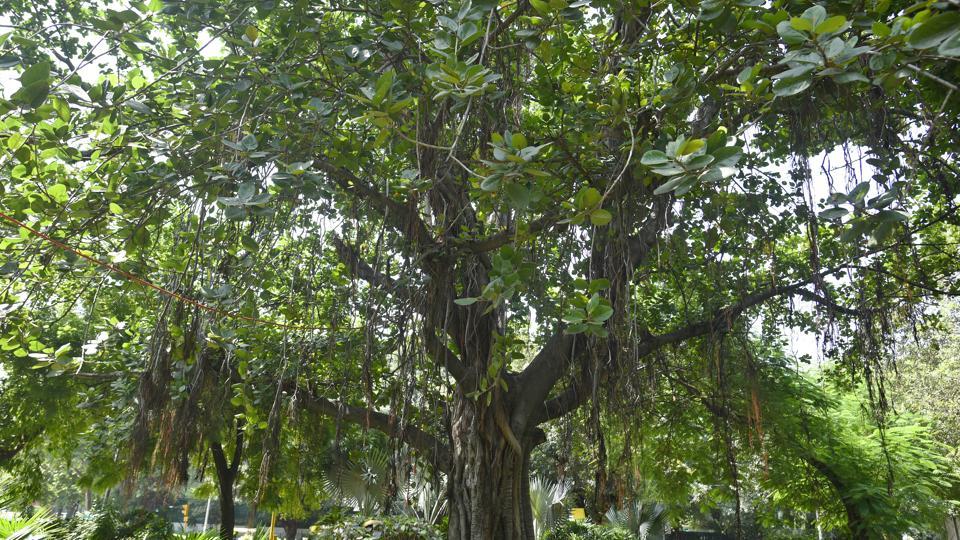
CHENNAI: Some of Chennai’s century-old trees will soon be accorded special heritage status following a scientific health assessment using Electrical Resistance Tomography (ERT), a non-invasive diagnostic technique. The evaluation will be conducted by experts from the Institute of Wood Science and Technology, Bengaluru, and the Institute of Forest Genetics and Tree Breeding (IFGTB), Coimbatore.
State forest secretary Supriya Sahu said the initiative is part of the Green Tamil Nadu Mission (GTM), which has already identified around 100 ancient trees across the state for protection. “These living legends play a vital ecological role as carbon sinks, biodiversity hubs and cultural icons, offering shade and stories from Chennai’s colonial and pre-colonial past,” she said.
GTM project director I Anwardeen said nearly 50 trees in the city have been shortlisted for heritage tagging. The assessment involves ERT, a technology that works like an X-ray for trees, creating cross-sectional images of the trunk without causing damage. By measuring electrical resistivity at multiple points, the method maps internal structures such as heartwood, growth rings, decay zones, moisture levels and wood density, enabling detailed health diagnostics without cutting into the tree.
Calling the technique a breakthrough, IFGTB senior scientist Buvaneswaran said, “ERT is a game changer for tree conservation. It is cost-effective, eco-friendly and ideal for long-term monitoring.”
One of the trees already studied is a Putranjiva roxburghii (lucky bean tree, locally known as Irukolli) inside the Theosophical Society campus. Tomographic scans revealed that about 50% of its heartwood remains intact, while the rest showed higher moisture content — findings that were later corroborated through targeted wood core sampling.
Officials said similar assessments will be carried out on five more century-old trees within the campus. Chennai district forest officer V A Saravanan noted that these heritage candidates symbolise the city’s resilience and provide crucial habitats for birds and insects. “As climate threats intensify, ERT will help ensure these trees survive for generations to come,” he said.