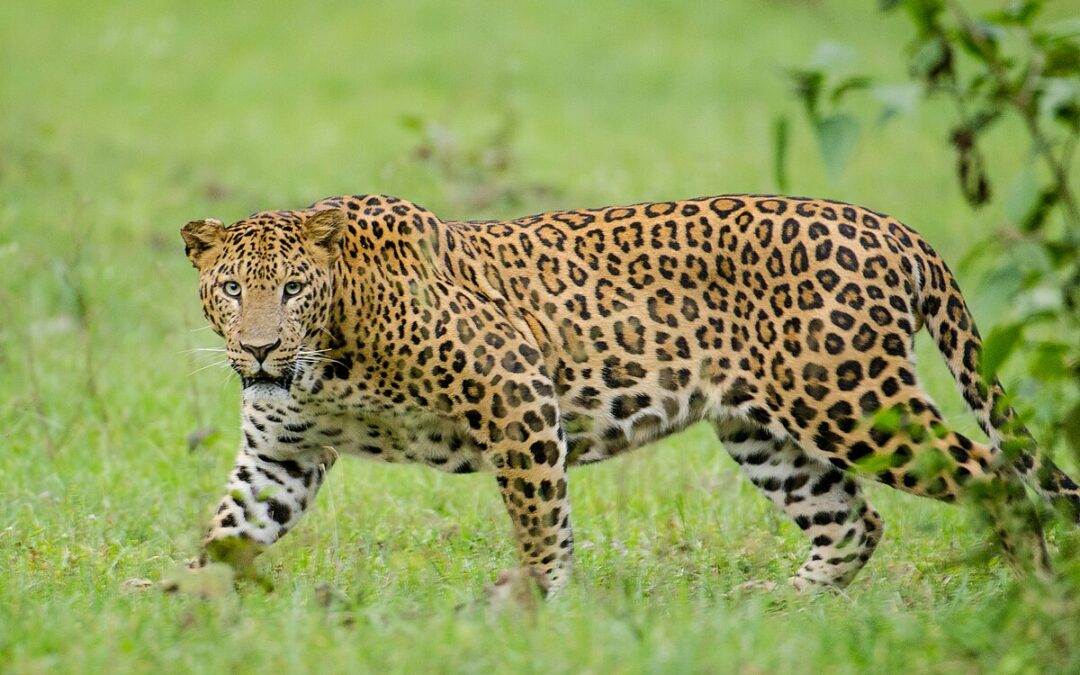
Belagavi: Human–animal conflicts in Karnataka have claimed 203 lives over the past four years, averaging nearly 50 fatalities each year. Chamarajanagar recorded the highest number of deaths, with 40 fatalities between 2022–23 and November 2025, followed by Kodagu with 32 and Mysuru with 25. No deaths were reported from Bagalkot and Ballari during the same period.
Official data also shows a gradual decline in fatalities. While 65 deaths were recorded in 2023–24, the figure dropped to 46 in 2024–25 and further to 35 in 2025 up to November.
Replying in writing to questions raised by BJP MLA Harish Poonja, Forest Minister Eshwar Khandre said the government had implemented several measures to reduce human–wildlife conflict, including rail-track barricading and solar fencing along forest boundaries.
Addressing the legislative assembly, Khandre said ₹264 crore had been spent on rail-track barricading and ₹144 crore on solar fencing over the past three years. Rail barricades have so far been installed along 428 km of vulnerable stretches.
To manage human–elephant conflict, trained captive elephants from camps at Dubare, Matthigodu, Balle, Harangi, Bheemanakatte and Ramapura are deployed to drive away or rescue wild elephants, the minister said. He added that the government has constituted three dedicated teams, each comprising experienced veterinarians, mahouts and support staff. On receiving a request from anywhere in the state, one of these teams is dispatched to handle the situation.
Khandre also said the forest department is closely monitoring wildlife movement using the ‘Hejje’ dashboard, radio-collared animals, AI-enabled cameras and drones. An advanced alert system and digital display boards have been installed in villages and elephant-prone areas to provide timely warnings to residents, helping to reduce conflict.
Emphasising the need for long-term solutions, the minister said wildlife corridors must be established to enable elephants and other animals to move freely between forest areas without obstruction. Steps are being taken to frame a dedicated wildlife corridor policy, he added.
The minister said compensation of ₹20 lakh is paid to the dependents of those killed in human–animal conflicts. In the current year, ₹6.3 crore has been disbursed towards compensation. However, he noted that compensation could not be paid in certain cases, such as when a person died while illegally collecting honey in a forest. In some instances, only partial compensation of ₹5 lakh was released as families failed to submit the required documents.