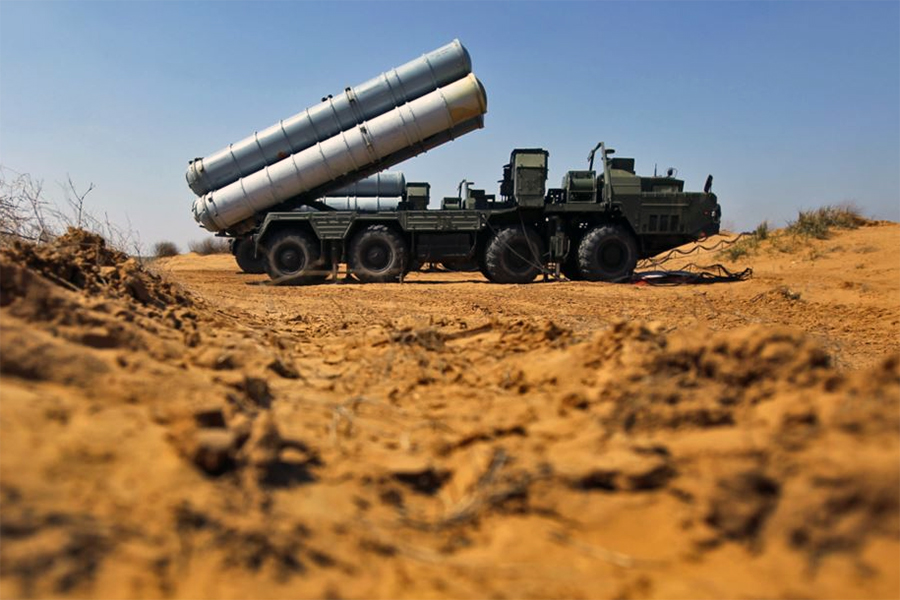
India’s Ministry of Defence is anticipated to release a request for proposal (RFP) to the Russian state-owned defense giant Rosoboronexport for the procurement of approximately 300 missiles intended for Indian S-400 air defense systems. This acquisition aims to replenish the inventory utilized in Operation Sindoor and to enhance stockpiles of both long-range and short-range surface-to-air delivery systems, according to sources familiar with the situation.
The acquisition, valued at over ₹10,000 crore, is being expedited through a fast-track process, with the purchase expected to be finalized within this financial year, pending approval from the Cost Negotiation Committee (CNC) and the Cabinet Committee on Security (CCS). The Defence Acquisition Council, led by Defence Minister Rajnath Singh, has already sanctioned the purchase, and an acceptance of necessity has been granted.
In addition to this, the procurement of an additional five S-400 air defense systems from Russia is being contemplated to safeguard Indian airspace against enemy rockets, missiles, and aircraft. Furthermore, the Indian armed forces are exploring the Russian Pantsir missile system to counter armed and kamikaze drones. The S-400 and Pantsir short and medium-range missile systems can be integrated into a dual-layer defense framework to neutralize all aerial threats originating from across the borders. Both acquisitions are currently under consideration, and a decision is expected to be made soon, as indicated by the aforementioned sources.
In the meantime, a minimum of 20 private sector companies in India have expressed interest in the defence ministry’s Request for Proposal (RFP) concerning the acquisition of 87 medium altitude long endurance (MALE) drones, valued at approximately ₹20,000 crore. Firms such as Elbit from Israel, General Atomics from the United States, and Bell have partnered with Indian enterprises to produce MALE drones for India, with the delivery of 31 US-manufactured Predator high altitude long endurance armed drones anticipated by the years 2028-29.
While India is in the process of procuring long-range air-to-air missiles from Russia under an emergency procurement initiative, it is not expected that any defence agreements will be finalized with Russia during the summit-level discussions between President Vladimir Putin and Prime Minister Narendra Modi on December 5. Other significant Russian proposals regarding defence aerial, surface, and sub-surface platforms are currently under review, with a conclusive decision pending, according to sources.
The replenishment and stocking of S-400 surface-to-air missiles, which have ranges of 400km, 200km, 150km, and 40km, were considered essential as the Indian armed forces extensively utilized this air defence system to intercept Pakistani fighter jets, early warning and intelligence-gathering aircraft, as well as armed drones during Operation Sindoor in May 2025. Following India’s strike on a wide-bodied aircraft located in Punjab, Pakistan, at a distance of 314km using an S-400 long-range missile, Rawalpindi effectively relocated all its operational aircraft to airbases in the western region near Afghanistan and Iran.
As India launched attacks on Pakistani radar installations located in Lahore, Rawalpindi, Sialkot, and Pasrur, the Pakistani air force refrained from engaging on May 9-10, primarily due to concerns regarding the S-400 system stationed in the Adampur and Bhuj sectors. It is anticipated that two of the remaining five contracted S-400 systems will be deployed in the upcoming year.