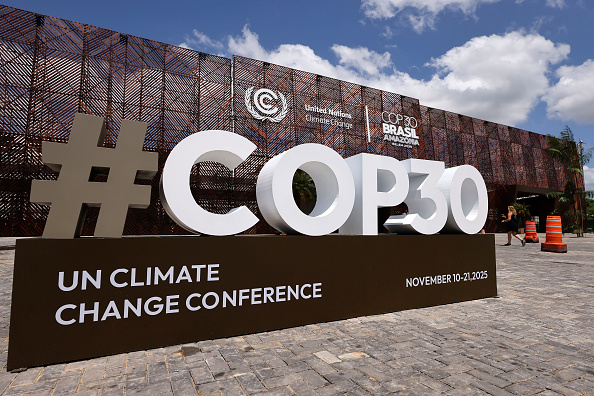
NEW DELHI: India has welcomed the major outcomes of the 30th UN climate conference (COP30), saying the decisions acknowledge the urgent need for adaptation support in developing countries and avoid shifting the burden of climate mitigation onto nations least responsible for global emissions. The conference concluded on Saturday in Belem, Brazil.
Union environment minister Bhupender Yadav, appreciating the Brazilian Presidency’s focus on climate finance, wrote on X: “A substantive decision on adaptation reflects the principle of equity and recognises the overwhelming need for adaptation in developing countries.”
One of COP30’s central decisions was to triple adaptation finance to roughly $120 billion a year by 2035, up from the current $40 billion. Though this funding will form part of the broader target of $300 billion in annual climate finance by 2035, India noted that the move gives an important boost to adaptation efforts across vulnerable nations.
The conference also agreed to establish a ‘just transition mechanism’ to protect workers and communities as economies move toward clean energy, and to launch a ‘global implementation accelerator’, a two-year process aimed at narrowing the gap between existing national climate commitments and what is needed to limit global warming to 1.5°C.
These outcomes align with India’s longstanding position that developing countries must not be expected to compensate for the failures of historical emitters and that wealthy nations should not use unilateral trade measures—such as the EU’s Carbon Border Adjustment Mechanism (CBAM)—under the guise of climate action. India has opposed CBAM, set to start next year, arguing it imposes unfair carbon tariffs on exports like steel, aluminium and cement from developing economies.
Significantly, the COP30 agreement acknowledged these concerns, noting climate response measures must not become “disguised restrictions on international trade.” In its closing statement, India thanked the COP30 Presidency for enabling discussion on such unilateral actions and stressed that these issues “cannot continue to be brushed under the carpet.”
India also welcomed the establishment of the just transition mechanism, calling it a “significant milestone” that can help operationalise equity and climate justice at both global and national levels.