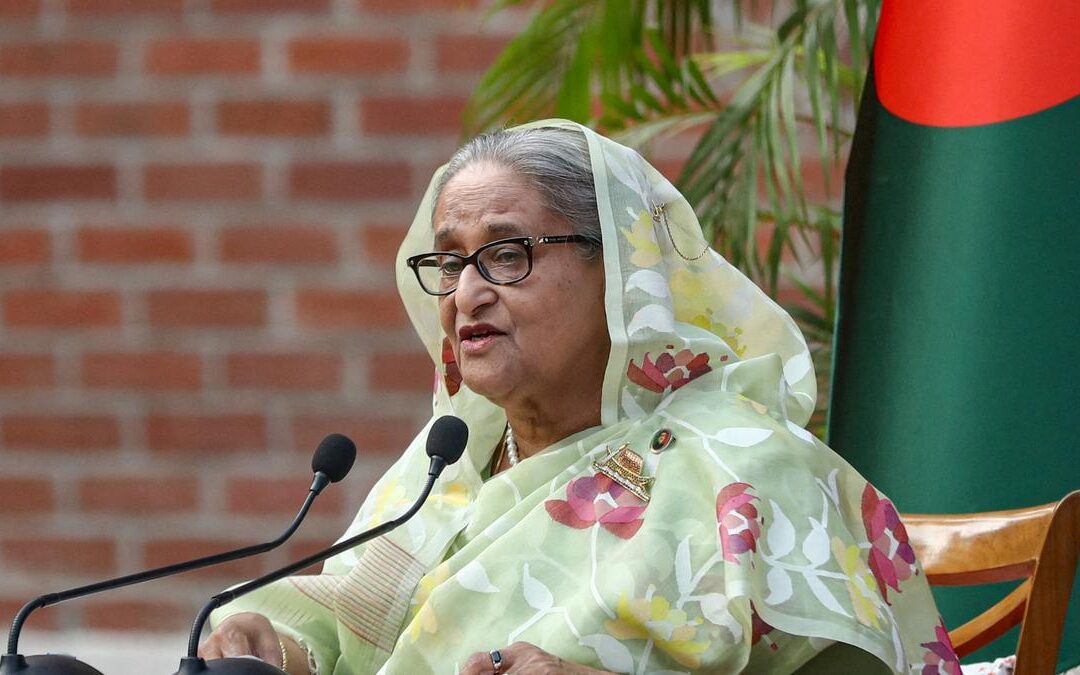
Ousted Bangladesh Prime Minister Sheikh Hasina’s son, Sajeeb Wazed, asserted on Thursday that the country’s interim leader, Muhammad Yunus, would not be able to harm his mother. He stated, “Yunus cannot touch my mother and he cannot do anything to her.” These comments come at a time when Hasina’s future is uncertain following a tribunal in Bangladesh sentencing her to death for her alleged involvement in the deadly student-led uprising of 2024. The tribunal has connected her to the violent crackdown that led to her ouster. Chief adviser and interim leader of Bangladesh, Muhammad Yunus, welcomed the verdict, asserting that no one is above the law. In an interview with IANS, Wazed remarked: “They will not be able to kill her, but they will execute the verdict. First of all, they can’t get her. And once there is a rule of law, this entire process will be invalidated. Everything here is so illegal and unconstitutional and violates every legal principle that, once there is rule of law, everything will be dismissed and it will not be sustainable. Therefore, Yunus cannot touch my mother, and he cannot do anything to her.”
In a pointed critique of Bangladesh’s extradition request, Sajeeb Wazed expressed gratitude to India for safeguarding Hasina’s life. He also addressed the calls for the revocation of Yunus’ Nobel Peace Prize amidst accusations of human rights violations under the interim government. “Nobel committees typically do not rescind their awards. However, consider Nobel laureate Aung San Suu Kyi in Myanmar. She too received the Nobel Prize. The Peace Prize is largely awarded through lobbying. Yet, she was responsible for the deaths of Rohingyas, and now Yunus is transforming Bangladesh into a failed state and an Islamist terrorist state,” he remarked. When questioned about what actions the Congress party in India might have taken if it were in power, the Indian-origin politician stated: “The Congress party would have acted in precisely the same manner as the current government. In India, we uphold the rule of law and adhere to constitutional processes. You have consistently respected the Constitution and the laws.” Wazed vehemently condemned the trial process that culminated in Hasina’s death sentence, labeling it wholly illegal. “This has been executed in a completely unlawful manner. It is a farce. Firstly, there exists a government that is unelected, unconstitutional, and illegal. Furthermore, to expedite the trial in the tribunals, they had to modify laws, which can only be done through Parliament. Presently, there is no Parliament. The entire process was entirely unlawful. Seventeen judges from this tribunal were dismissed, and a new judge with no prior experience was appointed. He has publicly made an offensive remark regarding my mother, indicating his clear bias. He accused the authorities of obstructing Hasina’s right to legal counsel. “They have not permitted my mother to select any attorney. Instead, they assigned their own lawyers to represent her. Historically in Bangladesh, such trials require years of hearings; however, this one was concluded in just 140 days. Therefore, it constitutes a complete travesty of justice. There has been a lack of due process. This situation is absurd,” he remarked. This ruling represents one of the most significant legal actions taken against a former Bangladeshi leader in decades and occurs mere months before the national elections anticipated in early February. Hasina, aged 78, has declined to return from India to participate in the trial. The court investigated claims that she commanded a violent reaction to the mass student protests that ultimately led to her ousting in August 2024. The former prime minister, who is Bangladesh’s longest-serving leader, is confronting numerous charges related to the period of turmoil. A report from a UN human rights office estimated that as many as 1,400 individuals lost their lives between July 15 and August 15 during the “July Uprising,” which followed an extensive security crackdown initiated by her administration.