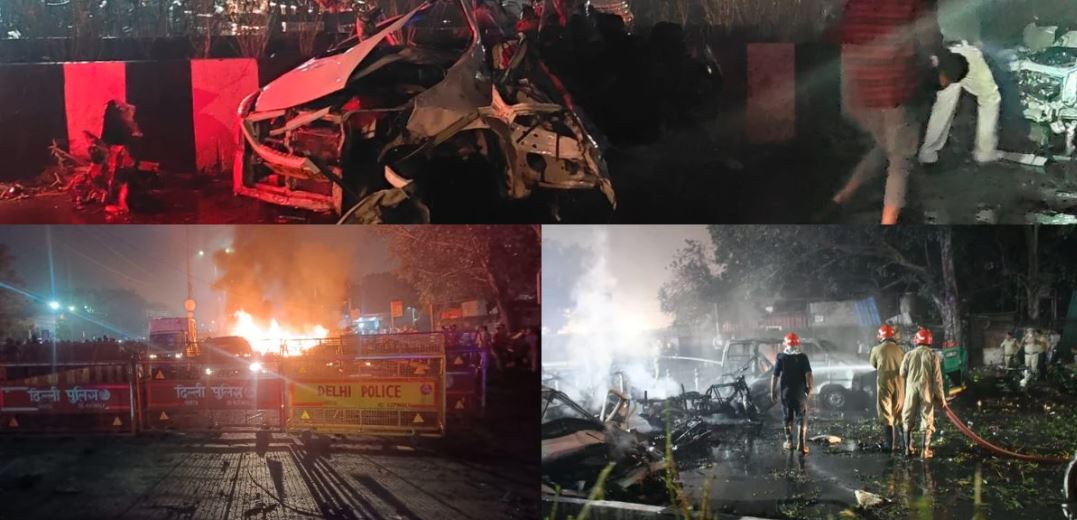
NEW DELHI: Investigators probing the November 10 suicide bombing near the Red Fort — which killed 15 people — are working to unravel three crucial questions at the center of the case.
The first mystery concerns where the explosive device was assembled. A strong line of investigation suggests that Dr Umar may have built or finalised the improvised explosive device (IED) at a parking area near Old Delhi’s Sunehri Masjid. This theory is supported by a clear CCTV trail showing Umar driving into the lot at 3:19 pm and leaving at 6:28 pm, spending over three hours inside. The blast occurred nearby just 24 minutes later, at 6:52 pm.
The second question revolves around how the IED was triggered. Officials say this will likely be clarified once the National Security Guard (NSG) and forensic teams submit their detailed explosive analysis report, which will then be matched with other investigative findings.
The third puzzle — who guided Umar or whether he was in contact with a handler — depends on a deeper analysis of internet protocol detail records and dump data. Investigators have flagged around 70 anomalous active numbers and are examining whether any were linked to contacts traced to Turkiye or Afghanistan, according to sources.
Meanwhile, police are also reviewing designs, recovered materials, and documents that reveal the module’s broader plans. Umar and his associate, Dr Muzammil Shakeel — who later had a fallout with him over financial disputes — had allegedly tasked an accomplice, Jasir alias Danish, with developing drones equipped with cameras and explosives for both reconnaissance and future attacks. The group was reportedly also studying Hamas-style gliding rockets for potential use.
The National Investigation Agency (NIA) is currently interrogating two arrested suspects — Jasir and Amir, the car owner — as the probe expands to uncover the module’s full capabilities, networks, and operational plans.