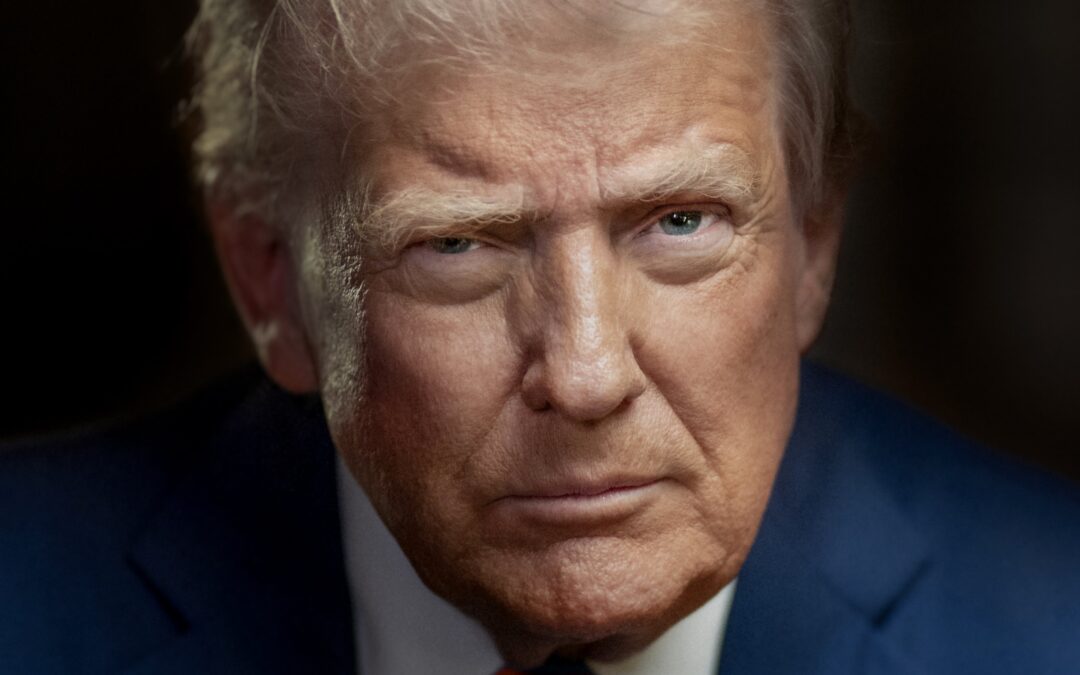
The United States Supreme Court is scrutinising the legality of President Donald Trump’s reciprocal tariffs, a central component of his economic and foreign policy that has reshaped global trade dynamics. The outcome could redefine the limits of presidential power in trade matters and mark a critical moment for Trump’s administration.
Trump has appealed to the Court to uphold these tariffs, which he has described as a vital tool for economic leverage and diplomatic negotiation. A ruling against him would represent a major departure from the Court’s earlier support of his wide-ranging executive actions in areas such as immigration enforcement, federal agency management, and military policy.
The tariffs were enacted through the International Emergency Economic Powers Act (IEEPA)—a 1977 law permitting presidents to regulate commerce during national emergencies. Trump was the first to invoke IEEPA for imposing tariffs on nearly all U.S. trading partners, framing trade deficits as a threat to national security.
According to a Reuters report, the justices expressed scepticism during Wednesday’s hearing about whether the IEEPA legitimately supports such sweeping tariff powers. Both conservative and liberal members of the bench questioned the administration’s reliance on emergency legislation to justify long-term trade measures, suggesting it might encroach upon Congress’s constitutional authority over taxation and commerce.
However, several conservative justices also noted the president’s broad powers in foreign relations, hinting at a potential divide within the Court, which currently holds a 6–3 conservative majority.
The session, lasting more than two and a half hours, reviewed appeals from the Trump administration challenging lower court rulings that found the tariffs exceeded legal limits. The lawsuits were filed by affected businesses and a coalition of twelve Democratic-led states.
Chief Justice John Roberts pressed U.S. Solicitor General D. John Sauer, representing the administration, on the constitutional implications of imposing tariffs without congressional approval:
“The imposition of taxes on Americans has always been the core power of Congress,” he remarked.
Tariffs, which act as import duties, could potentially generate trillions in federal revenue over the next decade—an area traditionally controlled by Congress.
Roberts also raised the “major questions” doctrine, which requires explicit congressional authorization for executive actions with significant economic or political consequences.
“You’re asserting authority to impose tariffs on any product, from any country, at any level, indefinitely,” Roberts noted. “That seems like a major power, and the statutory basis appears ill-fitted.”
The Court previously invoked this doctrine to strike down high-impact regulations under President Joe Biden’s administration.
Justice Amy Coney Barrett questioned Sauer on whether any historical precedent linked IEEPA’s term “regulate importation” to tariff authority.
“Where has that phrase been used to mean imposing tariffs?” she asked.
Traditionally, IEEPA has been used for targeted sanctions or asset freezes during crises, not for broad trade measures. Sauer argued that Trump deemed trade imbalances an “extraordinary threat” requiring national emergency powers, warning that removing the tariffs could expose the U.S. to “aggressive trade retaliation” and weaken its global standing.
Justice Ketanji Brown Jackson, however, countered that Congress designed IEEPA to limit, not expand, presidential powers:
“It’s quite clear Congress intended to constrain emergency powers, not broaden them,” she said.
Sauer insisted the “major questions” doctrine was irrelevant, as the president’s constitutional role in foreign affairs already encompassed such discretion. Justice Brett Kavanaugh appeared somewhat sympathetic, citing President Richard Nixon’s use of IEEPA’s precursor in the 1970s to impose temporary global tariffs—an example he described as “a good precedent.”
The Court has historically deferred to presidential authority in foreign policy. Roberts acknowledged that Trump’s tariffs had proven effective as a negotiating tool but pressed the challengers’ attorney, Neal Katyal, on where to draw the line between congressional and executive power.
“Yes, tariffs are a tax, a core power of Congress,” Roberts said. “But they’re also foreign-facing taxes—and foreign affairs are the core of the executive’s role.”
Between February and September, tariffs imposed under IEEPA generated approximately $89 billion, according to U.S. Customs and Border Protection data.
Justice Neil Gorsuch expressed concern that granting such broad discretion to the president could undermine the Constitution’s separation of powers:
“What would stop Congress from simply abdicating all responsibility for regulating foreign commerce—or even declaring war—to the president?” he asked.
Treasury Secretary Scott Bessent, who attended the hearing, later expressed optimism on a televised interview, asserting that even if the Court rules unfavourably, alternative legal measures could preserve Trump’s tariff framework. Tariffs introduced under separate statutes remain unaffected by this case.
Although the Supreme Court often takes months to issue rulings, the Trump administration has requested an expedited decision. The timeline for a verdict, however, remains uncertain.