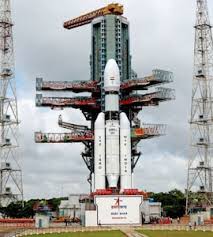
On Sunday, the Indian Space Research Organization (ISRO) successfully launched the heaviest communication satellite from Indian territory using the domestically produced heavy-lift LVM3-M5 rocket, also known as ‘Bahubali’, from Sriharikota in Andhra Pradesh.
Later that day, the satellite, CMS-03, was successfully positioned into orbit.
This indigenously developed satellite has a weight of approximately 4,400 kg and lifted off from the second launch pad of the Satish Dhawan Space Station in Sriharikota, Andhra Pradesh, at 5:26 pm.
- The satellite that was launched into orbit on Sunday is the heaviest communication satellite the country has ever had, with a weight of approximately 4,400 kg. Notably, this satellite was launched using the indigenous ‘Bahubali’ rocket.
- As stated by the Indian space agency, CMS-03 is a multi-band communication satellite designed to deliver services over a vast ocean area, including the Indian landmass, for a minimum of 15 years.
- ISRO chief V. Narayanan mentioned that the satellite is anticipated to enhance the nation’s communication capabilities in the forthcoming years. He also noted that CMS-03 incorporates a variety of new technologies and serves as a “shiny example of Atmanirbhar Bharat”.
- Officials from the Indian Navy informed PTI that the satellite will provide robust telecommunication coverage throughout the Indian Ocean Region and will assist in enhancing the Navy’s space-based communication and maritime awareness capabilities.
Lt Gen Anil K. Bhatt (retd), the Director General of the Indian Space Association (ISPA), stated in a press release that the satellite is expected to be a transformative asset for India’s maritime and national security, as it will offer advanced and secure communication channels crucial for operations in the Indian Ocean Region.
The satellite is equipped with sophisticated encryption, extensive frequency coverage, and high-capacity transponders, which will facilitate network-based naval operations and enhance situational awareness.
According to ISRO, the LVM3 vehicle was developed using entirely indigenous technology, including the C25 cryogenic stage. It boasts a successful launch history that dates back to its inaugural development flight, the LVM3 Crew Module Atmospheric Re-entry Experiment (CARE), which took place in December 2014.