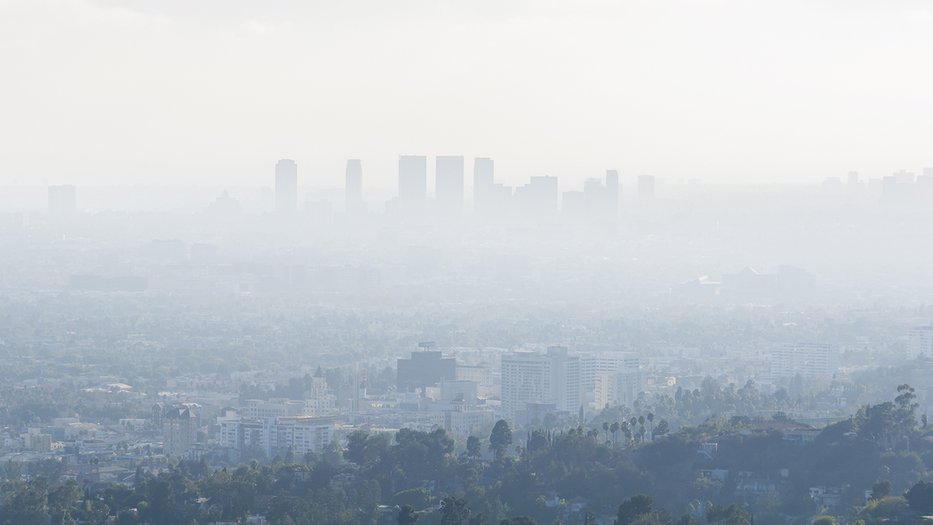
NEW DELHI: Two days after Diwali, Delhi woke up to a dense blanket of smog on Wednesday as pollution levels soared across the city. According to the Central Pollution Control Board (CPCB), the capital’s Air Quality Index (AQI) stood at 345, placing it in the ‘very poor’ category. Several neighbourhoods faced even higher pollution levels.
At 6:15 am, AQI readings reached around 380 in Ashok Vihar, Bawana, and Dilshad Garden. Other areas such as DTU, IGI Airport, and Lodhi Road recorded AQI levels below 300, falling in the ‘poor’ range. On Tuesday, four monitoring stations — Dwarka (417), Wazirpur (423), Anand Vihar (404), and Ashok Vihar (404) — entered the ‘severe’ zone, as per CPCB’s SAMEER app.
Delhi’s 24-hour average AQI, reported at 4 pm, remained in the ‘very poor’ range at 345, up from 326 on Sunday. Authorities warned that the situation could worsen in the coming days, with Stage II of the Graded Response Action Plan (GRAP) now enforced across Delhi-NCR. The move follows forecasts from the India Meteorological Department (IMD) and the Indian Institute of Tropical Meteorology (IITM).
Data from the Decision Support System (DSS) showed that transport contributed 15.6% of the city’s pollution on Monday, while industries and other sources made up 23.3%. Residents reported health issues such as breathing difficulty and eye irritation.
“Pollution hasn’t just increased today; it’s been rising for years,” said Sagar, a local resident. “Everyone blames politicians, but people also share responsibility. Firecrackers are a choice — then people complain that the government isn’t doing anything.”
On Tuesday morning, visuals showed Akshardham Temple shrouded in haze. The Supreme Court had recently permitted the sale and bursting of green firecrackers in Delhi-NCR between 6 am–7 pm and 8 pm–10 pm on Diwali eve and the festival day.