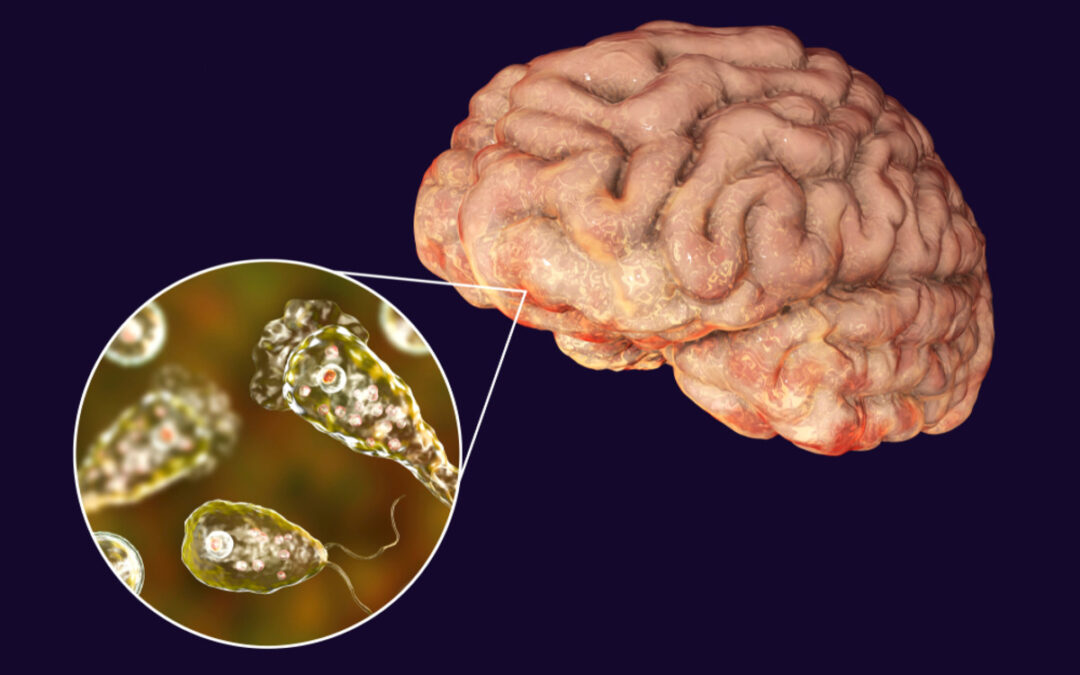
Thiruvananthapuram: The rare but deadly parasitic infection primary amoebic meningoencephalitis (PAM) has claimed 19 lives in Kerala this year—including a three-month-old infant and a 52-year-old—sparking a heated political showdown in the assembly on Wednesday.
The Congress-led UDF moved an adjournment motion, accusing the LDF government of presiding over a “collapsed” public health system. Opposition leaders cited rising cases of jaundice, dengue, leptospirosis, typhoid, and diarrhoeal diseases, and charged the government with neglecting grassroots awareness campaigns that could help prevent exposure to stagnant water, the main source of infection.
Globally, fewer than 500 PAM cases have been reported, yet Kerala alone has seen over 120, with 68 this year. The amoeba, Naegleria fowleri, infects when contaminated freshwater enters the nose, traveling to the brain and destroying tissue. Fatalities on September 1 included an infant and a woman under treatment at Kozhikode Government Medical College. Authorities said they administered miltefosine, an imported drug, but both patients succumbed. The state has since launched “Jalamanu Jeevan,” a chlorination drive covering wells, pools, and tanks.
Congress leader VD Satheesan accused the government of failing to act decisively: “Eight people died in 15 days. What is the protocol? Even a baby was infected—was that child in a swimming pool?”
Health minister Veena George rejected the charges as “smear tactics,” defending the government’s record with statistics: lower infant mortality, free liver transplants at Kottayam MCH, and district hospitals equipped with cath labs. She pointed to Kerala’s handling of Nipah, where fatality rates were cut from 70% to 33%.
But Satheesan said George was hiding behind old achievements: “Kerala’s health is on a ventilator, yet the minister evades accountability. Out-of-pocket health expenses have risen from ₹5,419 in 2016-17 to ₹7,889. Instead of acting, the state only reacts after lives are lost.”