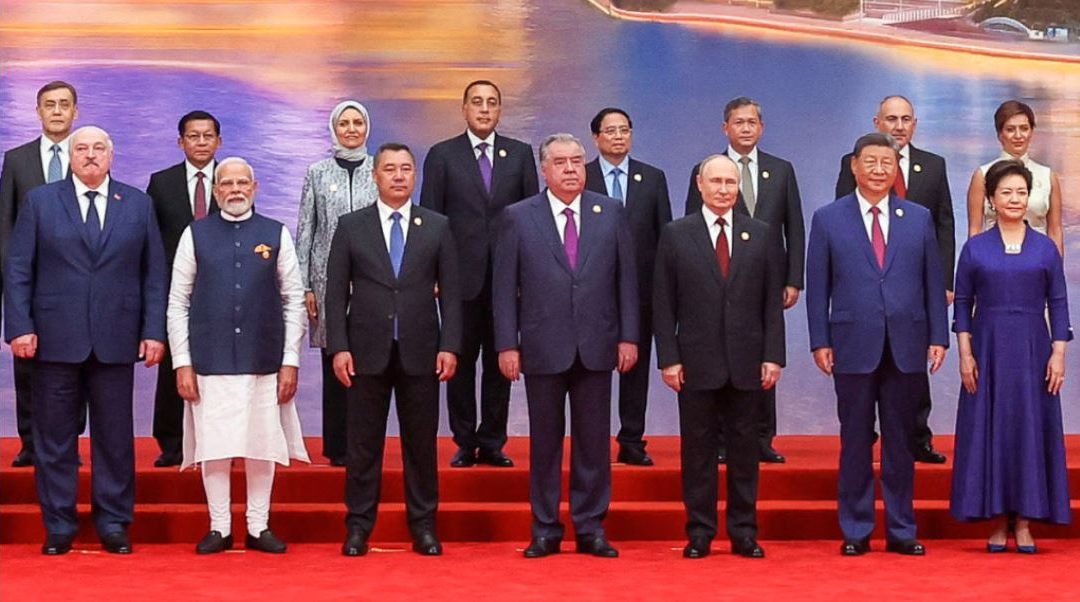
TIANJIN: The Shanghai Cooperation Organisation (SCO) on Tuesday issued the Tianjin Declaration, strongly condemning the April 22 terrorist attack in Pahalgam and calling for perpetrators, organisers, and sponsors of such acts to be brought to justice.
In his address, Prime Minister Narendra Modi cautioned member states against “double standards” on terrorism, pointedly questioning whether open support for terrorism by certain countries could ever be acceptable—a veiled reference to Pakistan.
While the declaration’s strong condemnation of Pahalgam allowed India to endorse it, the SCO also condemned the March attack on Pakistan’s Jaffar Express and a May attack in Khuzdar, a compromise sought by Islamabad. Pakistan has alleged Indian involvement in the Jaffar Express bombing, a claim New Delhi rejects.
Defence Minister Rajnath Singh had earlier refused to sign any SCO statement that did not mention Pahalgam, making the explicit reference a key diplomatic gain for India.
PM Modi’s Warning
“We have to say clearly, and in one voice, that no double standards on terrorism will be acceptable. We must oppose terrorism together, in every form and colour,” Modi said, calling terrorism not just a national threat but “a shared challenge to humanity.”
He noted that India had endured “four decades of ruthless terrorism,” leaving behind deep scars. “Recently, we witnessed the most heinous face of terrorism in Pahalgam,” he said, thanking nations that expressed solidarity. Modi also stressed India’s counterterrorism initiatives within the SCO framework, including efforts against terror financing, radicalisation, and extremist networks linked to Al-Qaeda.
Connectivity and Sovereignty
On connectivity, India once again refused to endorse China’s Belt and Road Initiative (BRI), reiterating opposition to the China–Pakistan Economic Corridor, which runs through Pakistan-occupied Kashmir. “Connectivity that bypasses sovereignty ultimately loses both trust and meaning,” Modi said, underlining sovereignty and territorial integrity as fundamental to the SCO Charter.
He highlighted India’s own initiatives—the Chabahar Port project and the International North-South Transport Corridor—as efforts to deepen ties with Afghanistan and Central Asia.
Opportunity and Global Reform
Expanding on SCO’s role, Modi urged reforms of international institutions, including the United Nations, to reflect the aspirations of the Global South. “To confine the aspirations of the Global South to outdated frameworks is to deny justice to future generations. The colourful dreams of the new generation cannot be displayed on a black-and-white screen,” he said.
He also proposed new areas of cooperation, recalling India’s 2023 presidency which introduced initiatives in start-ups, innovation, traditional medicine, and digital inclusion. To strengthen cultural bonds, Modi suggested creating a Civilizational Dialogue Forum within SCO to showcase the region’s heritage, literature, and traditions.
The Declaration
The Tianjin Declaration reaffirmed the SCO’s position that terrorism in all forms is unacceptable and condemned double standards in the fight against it. It also called for stronger global cooperation against the cross-border movement of terrorists.
By highlighting Security, Connectivity, and Opportunity as SCO’s three pillars, Modi positioned India as both a constructive and independent voice in the grouping, balancing calls for collective action with its emphasis on sovereignty and strategic autonomy.