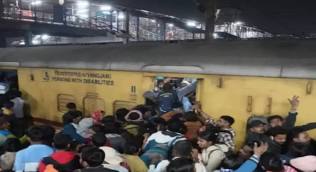
NEW DELHI: The tragic stampede at New Delhi Railway Station on February 15, which claimed 18 lives and injured 15 others, was caused by a large headload falling from a passenger, Railway Minister Ashwini Vaishnaw informed the Rajya Sabha on Friday, citing findings from a high-level inquiry committee.
Responding to a question from Samajwadi Party MP Ramji Lal Suman, Vaishnaw said the incident occurred on Foot Overbridge (FOB)-3, connecting platforms 14 and 15, at 8:48 PM. “There was a gradual increase in passenger density on the FOB after 8:15 PM. Many were carrying large headloads, hindering the smooth flow of movement. One such headload fell, causing a sudden disruption that triggered passengers to trip on the stairs,” the minister stated.
He emphasized that crowd management protocols were in place, but the unexpected fall of the headload created a chain reaction on the crowded staircase, leading to a deadly pile-up. “The incident was confined to the staircase area of FOB-3,” he clarified.
Compensation Paid to Victims
Indian Railways has provided ₹2 crore in ex gratia compensation to 33 victims and their families:
- ₹10 lakh to the next of kin of each deceased
- ₹2.5 lakh to each of the grievously injured
- ₹1 lakh to those with minor injuries
Measures to Prevent Recurrence
To prevent such tragedies, the Railway Ministry has initiated several corrective measures:
- Creation of permanent holding areas at 73 busy stations, including New Delhi, Anand Vihar, Ghaziabad, Varanasi, Ayodhya, and Surat, where crowd surges are frequent.
- Access control systems will be introduced: only passengers with confirmed reserved tickets will be allowed direct entry to platforms.
- All unauthorized entry points to platforms will be sealed.
- Additional measures are under consideration to streamline crowd movement, especially during peak travel seasons.
The stampede has once again highlighted safety and infrastructure challenges at major Indian railway hubs, prompting renewed calls for better crowd control, infrastructure upgrades, and passenger awareness.