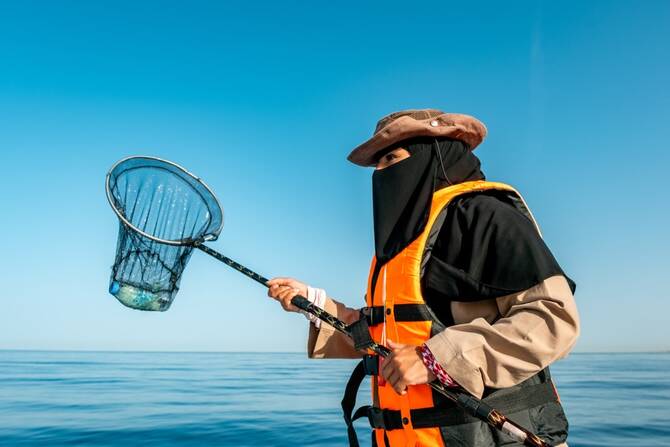
RIYADH: In a groundbreaking step for gender equality and environmental conservation, Saudi Arabia has launched the Middle East’s first all-female sea ranger corps, ahead of World Ranger Day (July 31). The announcement was made by the Prince Mohammed bin Salman Royal Reserve, which manages one of the Kingdom’s largest protected areas along the Red Sea.
The move aligns with Vision 2030, Saudi Arabia’s sweeping national reform agenda that includes ambitious goals for gender inclusivity and environmental protection. The new female sea rangers will patrol 170 kilometers of coastline within the Reserve, working alongside male counterparts and the Saudi Border Guard to protect fragile marine and coastal ecosystems.
A Pioneering Force for Gender Equity in Conservation
The Reserve’s ranger corps currently comprises 246 personnel, of whom 34% are women—a striking figure compared to the global average of just 11% for female representation in conservation. The force’s recruitment message, “Women are encouraged to apply,” reflects a transformative push to diversify the environmental workforce.
Five out of eleven ranger team leaders are now women, holding leadership positions in what was traditionally a male-dominated field. “From our first ranger recruitment in 2021, we’ve prioritized inclusion,” said Andrew Zaloumis, CEO of the Reserve. “Today, women are helping shape the future of conservation in Saudi Arabia.”
Rigorous Training and Regional Expertise
The first cohort of seven women completed an intensive one-year marine training program under the guidance of Dominique du Toit, a seasoned South African conservationist. The program included:
- Marine patrolling and aquatic safety
- Advanced swimming skills
- Fieldwork across challenging environments
“These women have shown remarkable discipline and commitment,” said du Toit. “Their success is not just a win for the Reserve but a major breakthrough for marine conservation in the Middle East.”
The all-female sea ranger unit became operational in July 2024, joining the frontline in the battle to protect the Reserve’s vulnerable biodiversity.
Protecting One of Saudi Arabia’s Most Valuable Ecosystems
Covering 24,500 square kilometers, the Prince Mohammed bin Salman Royal Reserve spans mountains, valleys, and a biologically rich stretch of Red Sea coastline. The Reserve’s marine zone, though comprising only 1.8% of Saudi Arabia’s territorial waters, is home to:
- 64% of Saudi Arabia’s coral species
- 22% of the country’s fish species
- Endangered marine life such as Hawksbill and Green turtles, Spinner dolphins, Dugongs, and Whale sharks
Rangers, now including women, patrol these areas using custom-designed marine vessels, monitoring everything from illegal fishing and logging to the health of mangrove forests that serve as critical carbon sinks and natural defenses against coastal erosion.
Since 2022, rangers have carried out nearly 35,000 land and sea patrols, in addition to:
- Conducting ecological surveys
- Managing wildlife reintroduction programs
- Overseeing sustainable tourism
- Enforcing environmental compliance
A National Vision for Environmental Stewardship
The formation of the all-female sea ranger corps is one of many initiatives spearheaded by the Royal Reserves Council, established in 2018 and chaired by Crown Prince Mohammed bin Salman. The council oversees six major reserves and is responsible for:
- Protecting natural habitats
- Promoting ecotourism
- Supporting the Saudi Green Initiative, which aims to conserve 30% of Saudi Arabia’s land and marine areas by 2030
This initiative positions Saudi Arabia as a leader in climate resilience and conservation, with a strong emphasis on local empowerment and gender equity.
Looking Ahead
The launch of the Middle East’s first all-female sea ranger corps not only breaks gender barriers but also sets a new standard for inclusive environmental governance. As Saudi Arabia accelerates efforts to meet its climate and conservation goals, these women are playing a pivotal role—guarding biodiversity, inspiring change, and forging a more sustainable and equitable future.
Their presence on the frontlines of marine protection serves as a powerful symbol of progress, both for women in the region and for global conservation efforts.