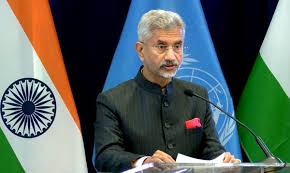
NEW DELHI: On his first visit to China in six years, External Affairs Minister S. Jaishankar emphasized the need for further border de-escalation and fairer trade practices, even as he welcomed recent progress in India-China relations. The visit comes amid a gradual thaw in ties between the two countries following years of military tensions along the Line of Actual Control (LAC).
During his meeting with Chinese Foreign Minister Wang Yi, Jaishankar acknowledged the “good progress” made in restoring stability, crediting the efforts to resolve border frictions and maintain peace and tranquillity as foundational for improving strategic trust and overall bilateral cooperation.
“This is the fundamental basis for mutual strategic trust and for the smooth development of our relationship. It is now essential that we address the remaining issues at the border, including the need for de-escalation,” Jaishankar said.
The two ministers agreed to take practical steps to enhance people-to-people exchanges, including the resumption of direct flight connectivity and mutual travel arrangements.
Jaishankar’s visit follows the resolution of the nearly five-year-long military standoff in eastern Ladakh, finalized in October last year. That breakthrough led to a bilateral conversation between Prime Minister Narendra Modi and President Xi Jinping on the sidelines of the BRICS summit in Kazan.
Jaishankar is in China to attend the Shanghai Cooperation Organisation (SCO) Foreign Ministers’ meeting, while PM Modi is expected to return for the SCO summit in September. Referring to the improved atmosphere since the Modi-Xi dialogue, Jaishankar called for a “far-sighted approach” to relations, emphasizing that both nations share the responsibility to preserve and build upon the current momentum.
In his talks with Wang, Jaishankar also raised India’s concerns over China’s export controls, which he warned could negatively impact domestic manufacturing. “As neighboring nations and major global economies, our bilateral ties encompass many dimensions. It is vital that restrictive trade measures and barriers are avoided to foster mutually beneficial cooperation,” he said.
He also stressed the importance of frequent strategic communication, expressing hope that such dialogue would not be limited to multilateral events but extend to regular bilateral visits as well.
Jaishankar used the platform to reaffirm India’s strong stance against terrorism. Referring to the SCO’s primary mandate, he said: “Combating terrorism, separatism, and extremism remains a shared concern. India hopes a policy of zero tolerance for terrorism will be firmly upheld.” He also expressed support for China’s SCO presidency and its efforts to secure effective outcomes.
In addition to geopolitical and economic concerns, Jaishankar pressed for greater cooperation on trans-boundary rivers, specifically urging China to resume sharing hydrological data, which is crucial for flood forecasting and water resource management in India.
The two sides had previously agreed—earlier this year—to restart direct air services and resume the Kailash Mansarovar Yatra, a significant pilgrimage route for Indian devotees. Jaishankar thanked China for reopening the pilgrimage route after a five-year hiatus.
Concluding his remarks, the minister said that stable and constructive India-China relations are not just vital for the two nations, but for global stability. “This is best achieved through mutual respect, mutual interests, and mutual sensitivity,” he said, echoing a past agreement that differences must not become disputes, and competition must not lead to conflict.
Jaishankar underlined that it is on this foundation that the two countries can continue building a positive and forward-looking relationship.