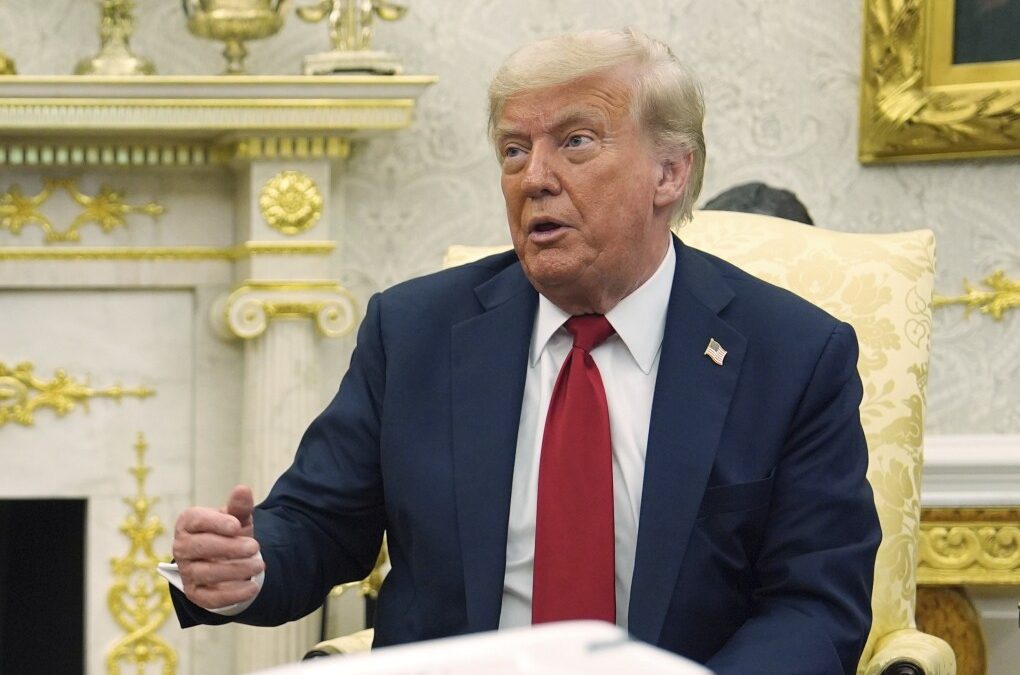
WASHINGTON, D.C.: Former U.S. President Donald Trump has once again claimed that he played a key role in defusing tensions between India and Pakistan, suggesting that his intervention helped prevent a full-scale war—possibly even a nuclear one. Speaking at a recent event, Trump reiterated that he used trade negotiations as leverage to push both countries toward de-escalation.
“We’ve been very successful in settling wars,” Trump said. “You have India and Pakistan. You have Rwanda and the Congo—that was going on for 30 years. India, by the way, Pakistan would have been a nuclear war within another week, the way that was going. That was going very badly. And we did that through trade. I said, ‘We’re not going to talk to you about trade unless you get this thing settled.’ And they did. They were both great leaders.”
Trump has made similar claims in the past. However, according to official records, the initial step toward de-escalation was initiated when Pakistan’s Director General of Military Operations (DGMO) reached out to his Indian counterpart to propose a halt to hostilities across land, air, and sea.
Tensions between the two nations had spiked following the April 22 terror attack in Pahalgam, Jammu and Kashmir, which killed 26 civilians. The attack, carried out by Pakistan-backed terrorists, occurred during the visit of U.S. Vice President JD Vance to India.
In retaliation, India launched Operation Sindoor on May 7. The Indian Air Force targeted nine major terror hubs across Pakistan and Pakistan-occupied Kashmir in a precision airstrike campaign. Pakistan attempted to retaliate using drones and missiles directed at Indian cities, but all incoming threats were successfully neutralized by India’s air defense systems, preventing casualties and damage.
In a strong counter-response, the Indian Air Force later struck 11 Pakistani airbases, including critical installations such as Nur Khan and Rahim Yar Khan.
While Trump continues to emphasize his diplomatic influence, official records and the sequence of events suggest that India’s military response and Pakistan’s outreach to de-escalate were pivotal in avoiding a broader conflict.