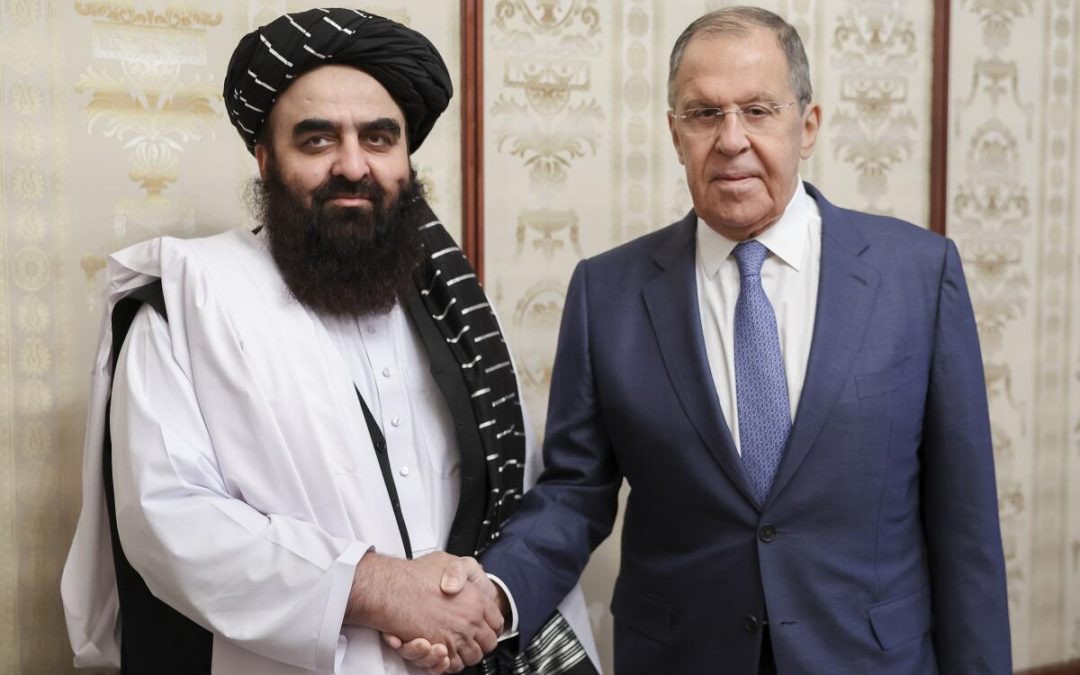
MOSCOW: In a significant diplomatic shift, Russia has become the first country to officially recognize the Taliban-led government in Afghanistan since the group’s return to power in August 2021. The move follows Moscow’s decision to remove the Taliban from its list of banned organizations and to formally accept the credentials of the group’s newly appointed ambassador.
The Russian Foreign Ministry confirmed on Thursday that it had received the diplomatic credentials of Gul Hassan Hassan, Afghanistan’s new ambassador to Moscow, signalling the start of formal diplomatic engagement.
“This step will help promote productive bilateral cooperation,” the ministry stated, according to the Associated Press.
Afghanistan’s Foreign Ministry hailed the development as historic. Taliban Foreign Minister Amir Khan Muttaqi said Russia’s recognition “sets a good example for other countries” that have so far refrained from offering formal acknowledgment of their regime.
Since the Taliban seized control of Afghanistan in August 2021 following the withdrawal of US and NATO forces, they have sought international legitimacy and recognition. However, most nations have remained hesitant, citing serious concerns over human rights abuses—particularly those affecting women and girls.
Despite maintaining high-level talks and informal diplomatic relations with several countries, including China, Iran, Qatar, and the United Arab Emirates, no country had officially recognized the Taliban regime—until now.
Russia’s decision comes amid its growing emphasis on the need for pragmatic engagement with the Taliban to ensure regional stability. In April, Moscow lifted its official ban on the group, citing the reality of the Taliban’s control over Afghan territory.
Russian Ambassador to Afghanistan, Dmitry Zhirnov, told state broadcaster Channel One that President Vladimir Putin had approved the recognition on the recommendation of Foreign Minister Sergey Lavrov. Zhirnov said the move reflects Russia’s “sincere intention to develop full-fledged relations with Afghanistan.”
The Taliban, meanwhile, continue to face global criticism for rolling back women’s rights. After promising a more moderate stance compared to their 1996–2001 regime, they quickly reimposed sweeping restrictions. Women are barred from most jobs and public spaces such as parks, gyms, and baths, while girls are prohibited from attending school beyond the sixth grade.
International aid to Afghanistan has also been curtailed, worsening the country’s economic crisis. Russia’s recognition may open the door to deeper economic and political engagement, as well as encourage other countries to reevaluate their stance.
While the broader global community remains cautious, Russia’s move marks a potential turning point in the Taliban’s pursuit of international legitimacy—one that may prompt a gradual shift in diplomatic dynamics around the isolated regime.