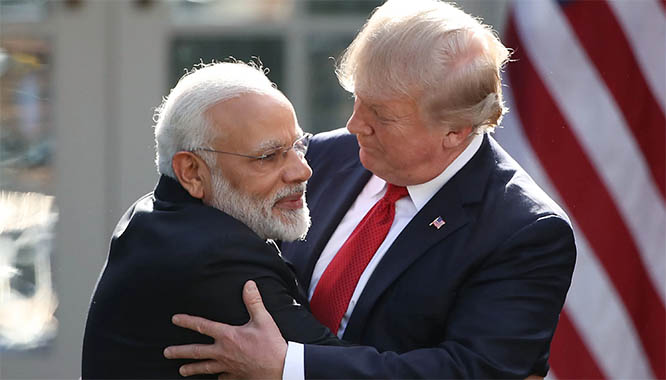
WASHINGTON D.C. — U.S. President Donald Trump on Tuesday hinted that a long-awaited trade agreement between the United States and India is close to being finalized, with a key focus on significantly reducing tariffs to make both economies more competitive.
“I think we are going to have a deal with India… and if they do that, we are going to have a deal for much less tariffs,” Trump told reporters, suggesting that negotiations are in their final stages.
The proposed Bilateral Trade Agreement (BTA) is aimed at addressing a range of tariff and market access issues. Negotiators are working against a tight deadline, hoping to conclude talks before July 9, when a 90-day moratorium on reciprocal tariff hikes expires. The pause, which began on April 2, temporarily suspended the re-imposition of 26% duties introduced during Trump’s earlier term.
India Takes Firm Stand on Agriculture
As talks enter a critical phase, Indian negotiators have reportedly adopted a tougher stance, particularly on agricultural market access and tariff concessions. Government sources said Monday that farm-sector sensitivities remain a sticking point in the discussions.
Rajesh Agrawal, India’s chief negotiator, is currently leading the delegation in Washington and has extended his stay to resolve outstanding issues, according to reports by ANI.
Jaishankar: ‘Hopeful of a Successful Conclusion’
Speaking to Newsweek, External Affairs Minister S. Jaishankar confirmed that negotiations are progressing, though complex. “We are in the middle, hopefully more than the middle, of a very intricate trade negotiation. Obviously, my hope would be that we bring it to a successful conclusion,” he said.
The comments coincided with White House spokesperson Karoline Leavitt’s remarks that a deal could be finalized “very soon,” reinforcing optimism on both sides.
Strategic and Economic Significance
The trade pact, once finalized, is expected to bolster economic ties between the two democracies and enhance supply chain resilience in key sectors. Lowering tariffs could unlock greater opportunities for businesses and reduce friction in bilateral commerce, particularly in pharmaceuticals, IT services, and agriculture.
Analysts view the agreement as a potential milestone in U.S.-India relations, reflecting deeper alignment not only in trade but also in strategic interests amid shifting global economic dynamics.