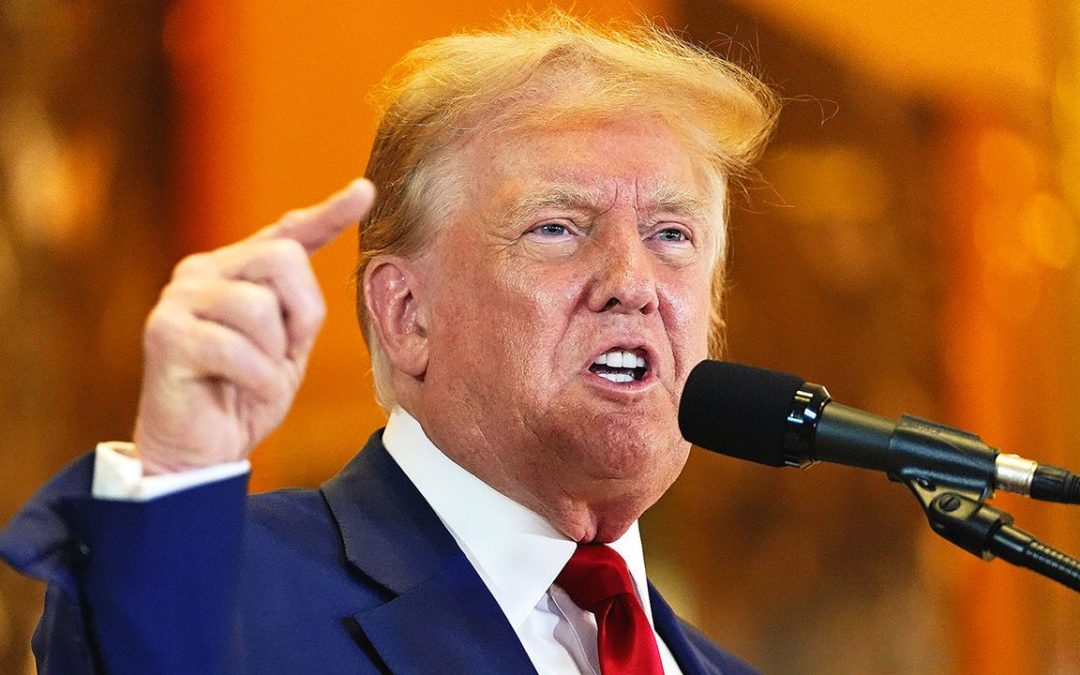
On Monday, U.S. President Donald Trump announced plans to impose a 25% tariff on imports from countries purchasing oil and gas from Venezuela—a move that could have far-reaching consequences for nations like India, China, and others, while escalating global trade tensions.
“Venezuela has been very hostile to the United States and the freedoms we represent. Therefore, any country purchasing oil and/or gas from Venezuela will face a 25% tariff on any trade with the U.S.,” Trump posted on Truth Social. He further accused Venezuela of deliberately sending criminals, including violent offenders and members of organizations like Tren de Aragua, to the United States.
Since returning to the White House in January, Trump has aggressively imposed tariffs on both allies and rivals as a means of exerting economic and diplomatic pressure. The newly proposed 25% tariffs on Venezuelan oil, which will affect both direct and indirect purchasers, are set to take effect on April 2, according to Trump’s signed directive. However, the final decision on implementation rests with the Secretary of State, who will consult with other U.S. agencies before making the determination.
This announcement is timed to coincide with Trump’s “Liberation Day,” on which he is expected to announce reciprocal tariffs on other countries, as well as broad sector-specific duties on imports such as automobiles, pharmaceuticals, and semiconductors.
Will India Be Affected?
The 25% tariff could significantly impact countries like India and China, which are among the top importers of Venezuelan oil. In 2024, India imported 22 million barrels of oil from Venezuela, accounting for 1.5% of its total crude oil purchases. In January 2024 alone, India’s imports surged to over 254,000 barrels per day, representing nearly half of Venezuela’s total oil exports, which amounted to about 557,000 barrels per day.
India’s largest importers of Venezuelan oil include Reliance Industries, which received 127,000 barrels per day, Indian Oil Corporation (IOC) with 37,000 barrels per day, and HPCL-Mittal Energy with 28,000 barrels per day. In December 2023, India’s daily crude oil imports stood at approximately 191,600 barrels.
The 25% tariff will be an additional charge on existing import duties, and it will remain in place for one year after a country’s last Venezuelan oil import or may be lifted earlier at Washington’s discretion.
What Else is Happening with Venezuela?
Trump’s announcement comes on the heels of a suspension of the deportation pipeline between the U.S. and Venezuela last month, following Caracas’ failure to uphold an agreement to quickly accept deported migrants. Venezuela recently reversed this stance, agreeing to resume deportations, with nearly 200 Venezuelan nationals deported from the U.S. through Honduras.
In addition, the Trump administration has extended the operational deadline for U.S. petroleum giant Chevron in Venezuela until May 27. Chevron had been operating under a sanctions exemption.
The “Dirty 15” Countries
Treasury Secretary Scott Bessent hinted during a recent interview on Fox Business that Washington would engage with trading partners to discuss tariff levels and non-tariff barriers. He indicated that countries could avoid these levies by changing their practices. Bessent also mentioned the “dirty 15″—a group of countries with trade imbalances with the U.S. that could face higher tariffs.